

Why You Must Understand Your Target Audience When Building a Successful Business + Brand?
Branding isn’t about creating something that appeals to everyone. It’s about standing out from the crowd, connecting with the right people, and building real relationships.
DEMAND GENERATION
2/6/20265 min read
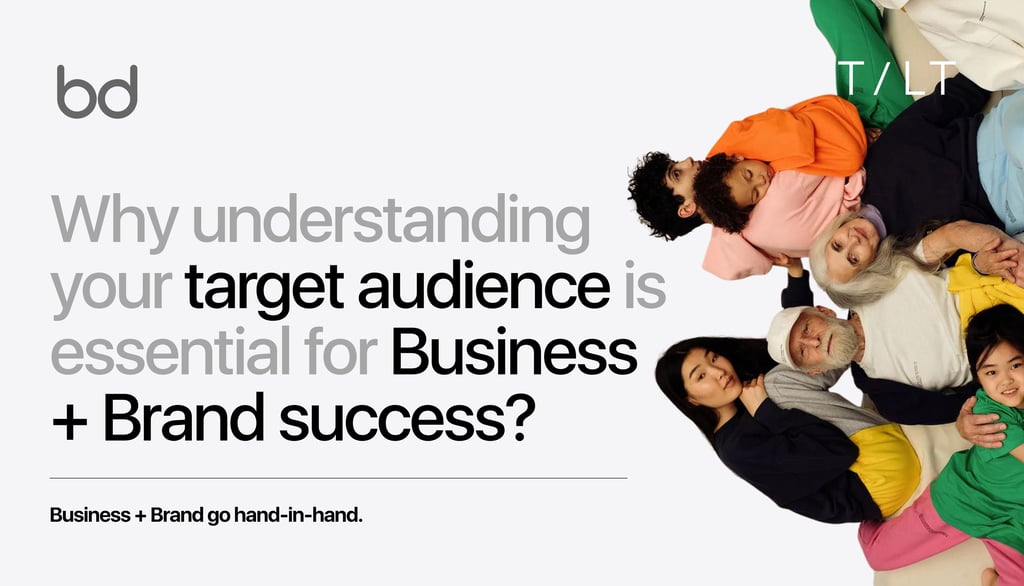
Branding isn’t about creating something that appeals to everyone. It’s about standing out from the crowd, connecting with the right people, and building real relationships.
That’s why identifying and understanding your target audience is one of the most important steps before building (or evolving) your brand.
When you know your audience, their behaviours, challenges, values, and lifestyles, you can create a brand that truly speaks to them. You’ll craft messages that resonate, evoke emotion, and build loyalty over time.
And emotions really matter: research shows that customers who feel an emotional connection with a brand spend over 300% more than those who don’t. (Source)
In short, your audience doesn’t just influence how you communicate; they shape your entire business, from product development to marketing.
Let’s look at 8 reasons why understanding your target audience is essential for building a thriving brand.
1. Define Your USP and Strengthen Your Positioning
Your Unique Selling Proposition (USP) is what sets you apart and helps you claim your spot in the market.
When you deeply understand your audience, you can tailor your USP to address their specific needs and motivations. Your positioning becomes clearer, sharper, and more relevant to the people you want to reach.
Example: Bottled Water Brands
On the surface, all bottled water is the same. But successful brands differentiate themselves by targeting distinct audiences:
Evian markets itself as a luxury brand, emphasising purity and origin from the French Alps, targeting affluent consumers.
San Pellegrino also targets a premium audience but leans toward fine dining and sophistication, using elegant glass bottles and classic European flair.
Pams, on the other hand, positions itself as affordable for everyday use, focusing on value and accessibility for supermarket shoppers in New Zealand.
Each of these brands sells water, but their positioning reflects deep audience understanding.
2. Build Stronger Connections Through Shared Values
Just like friendships, lasting brand relationships are built on shared values.
When customers see their own beliefs mirrored in your brand, they feel connected. In fact, 64% of consumers say shared values are the main reason they maintain a relationship with a brand.
Understanding your audience’s core values helps you identify common ground and build trust faster.
But this isn’t just about values, it’s also about self-expression. People choose brands that reflect who they are.
For example, wearing Patagonia signals not just fashion sense but also environmental responsibility. By buying from brands like this, customers express their identity through their choices.
3. Craft a Brand Personality and Identity That Attracts
People make snap judgments about brands, often in just a few seconds. That first impression depends on how your brand personality and identity come across.
Everything from your logo and colours to your fonts and brand voice should reflect what your audience values and responds to emotionally.
When you align your visual and verbal identity with your audience’s tastes, culture, and lifestyle, your brand feels instantly familiar and more trustworthy.
A well-aligned brand identity doesn’t just look good; it feels right.
4. Develop Messaging That Truly Resonates
Your brand messaging shapes how people perceive and remember you.
While your identity defines the look and feel, your messaging communicates your essence, your purpose, values, and story. When you understand your audience’s pain points, hopes, and goals, you can create messages that directly speak to them.
This makes your audience feel seen, valued, and understood.
Don’t be afraid to repeat your key messages; repetition builds recognition. Vary the formats: write blog posts, film short videos, share quotes, or use testimonials.
You can also use storytelling techniques to make your communication more engaging and emotional. And since 65% of people are visual learners, enhance your messages with meaningful imagery or design.
That’s how you move from simply talking to your audience to connecting with them.
5. Design a Memorable Customer Experience
The better you know your audience, the better you can design each brand touchpoint, from your branded website to your packaging and service experience.
When you tailor every interaction to your customers’ expectations and behaviours, it creates consistency and delight.
This matters: a positive customer experience can lead to a 73% increase in loyalty and sales. (Source)
It’s not about simply meeting expectations; it’s about exceeding them. That’s what turns buyers into repeat customers and fans who spread the word.
6. Optimise Your Marketing with Audience Insights
Understanding your audience lets you move from guesswork to strategy. It impacts every part of marketing, from what you say to where you show up.
Content Strategy
Once you know where your audience spends time and what matters to them, you can create content they genuinely want.
For example, if your target market is young mothers, you’ll likely reach them most effectively on Instagram or parenting forums. You can create relatable stories around sleepless nights, self-doubt, or small wins, topics that feel personal and real.
Knowing your audience’s search terms also helps improve SEO, attracting organic traffic from people actively looking for what you offer.
Partnerships
When you understand who your audience trusts, you can choose better collaborators, whether through co-branding or influencer partnerships.
Working with partners who already resonate with your audience strengthens your credibility instantly.
Personalization
Data-driven insights let you personalise marketing messages, recommendations, and offers. When customers feel seen and understood, loyalty deepens. Read more on personalisation for small brands.
Ad Targeting
Knowing your audience enables precise, cost-efficient ad targeting, reaching the right people with the right message at the right time.
Performance Measurement
Audience insights also allow for meaningful KPIs. If your audience values speed and responsiveness, for example, tracking metrics like response time or customer satisfaction will show whether your marketing aligns with what matters most to them.
7. Improve Your Offers and Pricing
Your audience doesn’t just shape your messaging; it shapes your entire business strategy.
By listening to their feedback and understanding their goals, you can develop better products and services that directly solve their problems.
You’ll also know how price-sensitive your audience is, allowing you to position your offer at a price point they can value and afford.
Example: IKEA
In the 1950s, IKEA noticed that people wanted well-designed furniture that didn’t break the bank. By introducing flat-pack furniture, they cut production, shipping, and assembly costs, making stylish, quality furniture affordable for millions.
It wasn’t just a product innovation; it was audience-driven insight turned into a competitive advantage.
For more on pricing strategy, check out Pricing and Brand Perception.
8. Keep Your Brand Adaptable
A clear understanding of your target audience isn’t just useful during launch; it keeps your brand relevant over time.
When you stay attuned to changes in attitudes, values, and preferences, you can adapt quickly to maintain connection and trust.
The most resilient brands are those that evolve with their audience, not around them.
Final Thoughts
Your audience sits at the heart of your brand and your business.
When you understand who you’re talking to, you can:
Build products and experiences that matter
Craft messages that resonate
Stay relevant as needs evolve
Even if your brand serves multiple groups, segmentation lets you deliver messages that feel personal and specific to each.
Remember: a strong brand grows from empathy and insight. The more you understand your audience, the stronger and more authentic your brand becomes.
If you’d like help defining your audience and building a brand that connects on a deeper level, I’d love to chat with you.
© 2026 BRNDxMORPH Media WWD Private Limited. All rights reserved.


Brand Blinks Global® | BBG is an independent global brand consulting and transformation company.
The trademarks, logos, and service marks displayed on this site are the property of their respective owners.
"Brand Blinks Global® | BBG," "Brand Blinks®," "Made for the Uncommon®," and the "bd®" logo are trademarks or registered trademarks of BRNDXMORPH Media WWD Private Limited.


RESOURCES
INTELLIGENCE
BUSINESS
PARTNER
