

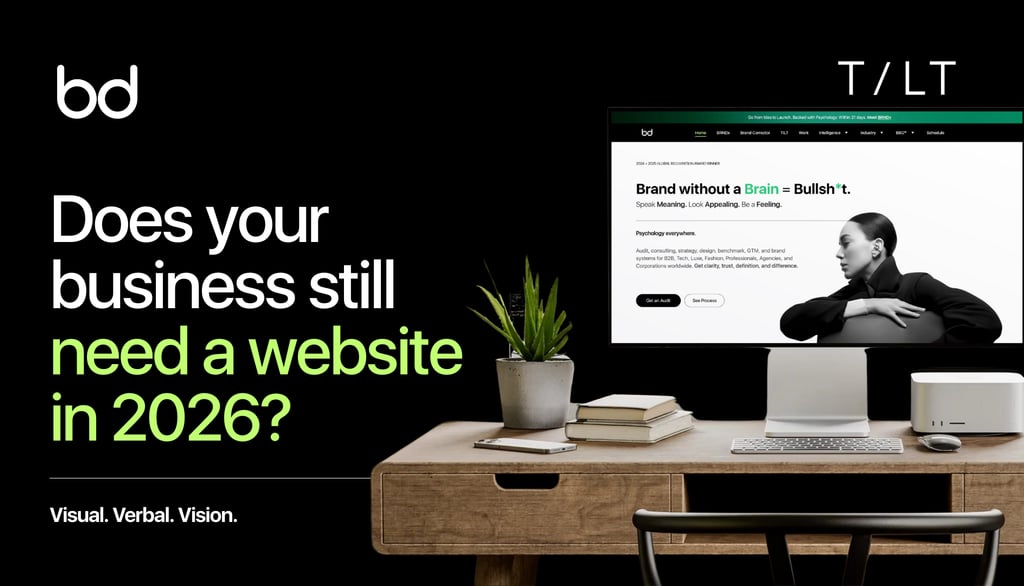
Does Your Business Still Need a Website in 2026?
Websites are dynamic and immersive. Through thoughtful design, messaging, and flow, you can shape a full experience, not just inform. Everything from imagery to navigation can mirror your brand’s culture, values, and personality.
BRAND DEVELOPMENTBRAND STRATEGY
2/2/20266 min read
With rising inflation and economic uncertainty, many businesses are cutting costs and rethinking where to invest.
And amidst today’s crowded digital landscape, with endless social platforms, e-commerce apps, and online communities, it’s natural to wonder:
Does your company still need a website in 2026?
The short answer? Yes, absolutely.
Websites aren’t just relevant; they might be more valuable than ever. They remain the one digital space you truly control, a platform for building trust, shaping perception, and converting curiosity into connection.
Here are 15 reasons why every modern business still needs a website (and why now might be the best time to invest in one).
1. Showcasing Your Brand
Expressing Your Brand Identity
Your website is the stage where your unique brand personality comes to life.
It’s where you can express your look, feel, and voice through consistent use of your logo, fonts, colors, tone, and even your brand story.
Unlike social media, your website gives you complete creative control; you set the tone and decide exactly how people see your brand.
Creating a Branded Experience
Websites are dynamic and immersive. Through thoughtful design, messaging, and flow, you can shape a full experience, not just inform.
Everything from imagery to navigation can mirror your brand’s culture, values, and personality.
A great example is the Equinox Hotels website, which lets visitors take a virtual tour through the space, instantly absorbing the luxury atmosphere that defines the brand.
2. Growing Your Audience and Boosting Brand Awareness
Enduring Content with Lasting Reach
Unlike social media posts that disappear in a day, the content you publish on your website keeps working for you long-term.
Blog posts, stories, and articles attract ongoing traffic and help new audiences discover you, even months or years later.
The key, however, is focusing on quality content that serves your audience and supports strong SEO.
Building Trust Through Engagement
Attracting visitors is the first step; keeping them engaged is what builds trust.
With meaningful content, intuitive navigation, and inspiring design, your website can give visitors a reason to return again and again, helping you turn curiosity into confidence.
3. Projecting Professionalism
Signaling Credibility
Did you know 84% of consumers view a website as essential to a business’s credibility? (Verisign study)
A polished, professional website tells visitors that you’re serious, legitimate, and invested in your craft.
Our brains make quick judgments based on how brands look, (a psychological shortcut known as the Halo Effect).
That means everything, from your page structure to your visuals, quietly tells people how competent and trustworthy you are.
Ways to Strengthen Credibility
Show social proof: Display testimonials, case studies, and reviews.
Reflect your industry: Align tone, design, and visuals with what customers expect in your space.
Show authority: Include accreditations, data, and client logos to reinforce expertise.
Staying Competitive
If your competitors have websites, you can’t afford not to. In fact, 97% of people now search online for local businesses. (SEO Tribunal)
A professional website doesn’t just help you compete; it keeps you visible.
4. Taking Control of the Customer Experience
Customizing the User Journey
Unlike platforms controlled by algorithms, your website gives you full freedom over how visitors experience your brand.
You decide what they see first, which actions you want them to take, and how you guide them toward conversion.
Richer Content and Communication
Mixing formats, text, video, imagery, and 3D visuals makes storytelling more powerful. You can track clicks, measure engagement, and even personalize experiences based on behaviour.
AI-Powered Customer Support
Artificial intelligence is reshaping customer service.
According to a BCG survey, 95% of service leaders believe AI bots will play a key role within three years.
Smart chatbots, for example, can provide personalized answers 24/7, improving satisfaction while saving time.
5. Becoming a Trusted Hub of Information
Your website acts as a central home for everything—your story, offers, contact details, and media links.
It ensures all your audience roads, social media, email campaigns, and ads lead to one reliable destination.
It’s also an opportunity to become a go-to expert in your field.
Example: Deliciously Ella built her wellness brand around a website that serves as a full resource hub—recipes, advice, and product offerings, all under one consistent identity.
6. Gaining Insights into Your Audience
A website does more than attract visitors; it helps you understand them.
Tools for Smarter Insights
Google Analytics shows useful metrics like demographics, location, devices used, and popular pages.
Search Console tracks which keywords bring you traffic.
Heatmaps and session recordings reveal how people interact (where they click, scroll, or drop off).
Keyword tools like WordStream or Semrush reveal what your audience is searching for.
Feedback forms and surveys give direct, human insight into their opinions.
A/B testing lets you compare versions of headlines, CTAs, or visuals to see what performs best.
The result: smarter decisions, better design, and more conversions.
7. Automating Key Operations
Once your site collects data, it can help streamline repetitive tasks and make your business more efficient.
Chatbots and AI
Automated chatbots handle common queries, take orders, or manage bookings—ensuring 24/7 availability.
Personalisation
Use visitor data to tailor content, offers, and recommendations. This builds loyalty by making customers feel seen.
Back-End Integrations
Connect your website with CRMs and email tools to automate follow-ups and nurture leads smoothly.
E-commerce Automations
Manage inventory, payments, and shipping updates automatically, especially useful for online stores.
Content Management
Use automation tools to schedule posts, update SEO tags, and even refresh copy efficiently.
8. Reducing Operating Costs
A well-optimized website isn’t just powerful, it’s cost-effective.
Traditional marketing materials like brochures or magazine ads are expensive and fade quickly. Your website offers infinite space to update and adapt, often at a fraction of the cost.
Ways Websites Cut Costs
Lower customer service expenses: With FAQs, live chat, and self-service tools.
Reduced overhead: E-commerce stores can replace physical outlets.
Long-term scalability: Adding new services or products online doesn’t require additional rent or infrastructure.
Simply put, your website keeps growing without your expenses growing alongside it.
9. Attracting Top Talent
Your website isn’t only for customers; it can also draw the right team.
How It Helps:
Post career opportunities in a dedicated section.
Show professionalism and stability by maintaining an updated, trustworthy online presence.
Showcase your company culture through photos, mission statements, and employee benefits.
Engage candidates using interactive forms or chat features for quick applications.
Share employee stories to highlight growth and success within the company.
10. Supporting Staff Training
Your site can double as an internal resource hub for onboarding new employees.
Create a dedicated training area with videos, guides, quizzes, and webinars to standardize learning.
It ensures everyone accesses reliable information, anywhere and anytime—and allows easy updates when your processes evolve.
11. Providing Security and Stability
In a world of constant digital threats and changing social platforms, your own website is the most secure and stable corner of the internet you can own.
Why It Matters
You control your data and communication directly.
You can add encryption, backups, and security measures.
You’re not at the mercy of algorithm changes or platform chaos.
Remember: not long ago, small businesses were locked out of Instagram, Facebook usage dropped by 50 million hours in a single year, and even X considered charging all users.
Your website ensures customers can always find you.
12. Flexibility and Future-Proofing
Websites are living, adaptable tools. You can change your content, visuals, or functionality anytime.
Want to launch a new product? Refine copy? Add a new lead magnet or AI chatbot? No problem.
Your website grows right alongside your business, no redesign required.
13. Supporting Sustainability
Websites are an eco-friendly marketing tool.
They reduce the need for printed brochures, catalogues, or flyers, saving both paper and costs.
And if you want to go greener, you can host your site with eco-friendly hosting providers that use renewable energy or carbon-neutral servers.
14. Global Reach
Your website works 24/7 across languages, borders, and time zones.
It gives your brand a global stage, allowing you to connect with audiences anywhere, anytime.
15. Easier Than Ever to Build
Gone are the days when websites required coding or huge budgets.
Today, platforms like WordPress, Elementor, Squarespace, and Webflow make it incredibly easy to create and manage stunning sites.
With templates, tutorials, and helpful communities everywhere, even non-technical founders can manage their websites confidently.
If you prefer professional help, though, I’d love to assist in designing a site that feels uniquely yours.
Does Your Business Still Need a Website?
Yes, maybe now more than ever.
But having any website isn’t enough. To truly make an impact, your site should be strategic, branded, user-friendly, and well-optimized.
Here’s a quick checklist to guide you:
Mobile-first design: It must look great and work fast on every screen.
Consistent branding: Use your logo, colors, fonts, and design system cohesively.
Storytelling: Use your site’s flexibility to tell your brand story clearly.
Rich content: Include copy, images, video, and 3D visuals to bring your products and culture to life.
Integrated tools: Use all-in-one systems for SEO, automation, and analytics.
Regular updates: Keep your content, plugins, and design fresh.
Performance monitoring: Track performance and user experience continuously.
Security protocols: Schedule regular backups and updates to protect your data.
A well-built website still anchors your brand’s credibility, creativity, and connection.
In an age of fleeting trends and rented social attention, it remains your one permanent home online.
If you’re ready to create or refresh your business website in 2026, let’s talk. It’s one investment that will only keep paying back, year after year.
© 2026 BRNDxMORPH Media WWD Private Limited. All rights reserved.


Brand Blinks Global® | BBG is an independent global brand consulting and transformation company.
The trademarks, logos, and service marks displayed on this site are the property of their respective owners.
"Brand Blinks Global® | BBG," "Brand Blinks®," "Made for the Uncommon®," and the "bd®" logo are trademarks or registered trademarks of BRNDXMORPH Media WWD Private Limited.


RESOURCES
INTELLIGENCE
BUSINESS
PARTNER
