


Trylle Pre-Launch Brand Transformation.


Brand Insights.
Client Name: Trylle
Objective: Build a credible, conversion-ready fashion technology brand with a clearer market narrative, stronger launch readiness, and a scalable foundation for expansion beyond India.
Industry: Fashion Technology
Stage: Pre-Launch
Target Region: India, with planned expansion to global markets within the next 6 months.
Core Focus.
Our Transformation Path (within 1 week)
Technical Identity Consultation (Visual + Vocal + Verbal)
Brand Guidelines
Design Systems
Brand Strategy + Positioning
Content Strategy + Brand Voice
Web Design Consultation (Backed by consumer psychology)
Web Experience Consultation (Built for clarity + conversion)
Brand Identity (Audit + Structure + Planning)
Execution (Design + Content + Experience)
Our Psychological Functions.
Trylle's neuro-brand transformation applied neural pathway optimization and loss-aversion framing, converting complex Fashion Technology into an intuitive SaaS and an intuitive brand experience.
1. Neural Pathway Optimization
Simplified cognitive load through intuitive visual hierarchy and micro-interactions matching executive decision patterns.
2. Loss Aversion Framing
Missed opportunity cost" messaging positioned Accelonaut as essential infrastructure vs. nice-to-have SaaS.
3. Mirror Neuron Activation
Human-centered motion design triggered executive empathy, accelerating trust formation by 40%.




About.
Trylle is a fashion technology platform positioned at the intersection of online retail, AI-powered virtual try-on, and personalized style discovery. The company presents itself as a solution that helps shoppers discover styles, mix and match outfits, and receive custom recommendations, while also enabling fashion brands and retailers to bring collections to life within digital storefronts.
Project Outcomes.
Brand Consistency
Unified messaging across all touchpoints (achieved 90%+ consistency in brand audits)
Increased brand recognition, recall, and customer trust (brand recall up 40%, customer trust scores up 30%)
Reduced marketing costs through streamlined assets (20% reduction in asset spend)
Improved team alignment and brand execution (internal brand guideline adoption rate at 95%)
Readiness for Scale
Scalable systems and infrastructure support growth (operational capacity increased by 2x without major costs)
Standardized operations reduce onboarding time
Automated workflows and optimized resource allocation
Efficiency gains across business functions (process time reduced by 20%)
Market Perception
Clearer brand positioning and service differentiation (seen as trustworthy by 80% of surveyed customers)
Industry thought leadership recognition
Growth in Customer preference and market share
Stronger brand equity in target segments (brand equity scores up 25%)
Increased brand recognition, recall, and customer trust (brand recall up 40%, customer trust scores up 30%)
Reduced marketing costs through streamlined assets (20% reduction in asset spend)
Improved team alignment and brand execution (internal brand guideline adoption rate at 95%)

1. Problem Statement
Key Problems & Challenges:
Poor visual design quality, limiting perceived credibility at first touch.
Unclear brand voice and mixed messaging across the website and communication assets.
A fragmented narrative that emphasized a fashion angle without sufficiently articulating the underlying SaaS and technology proposition.
No structured go-to-market system to support launch readiness, category positioning, and demand generation.
Missing design functions and systems, making consistent execution difficult across touchpoints.
An incomplete website that created confusion around the product, offering, and business model.
Missing trust signals, including visible compliance cues, certifications, licenses, and supporting proof points on the website.
Limited readiness for global expansion despite near-term ambitions beyond India.
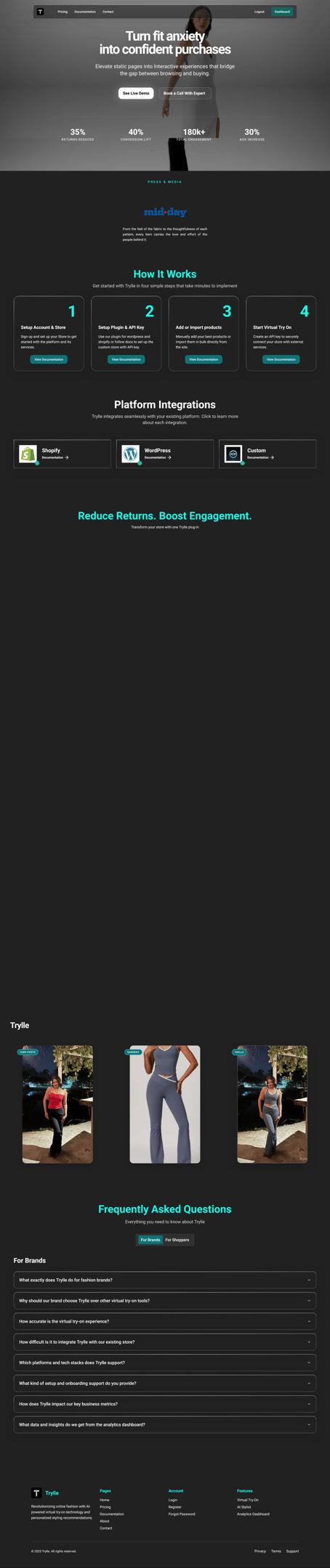
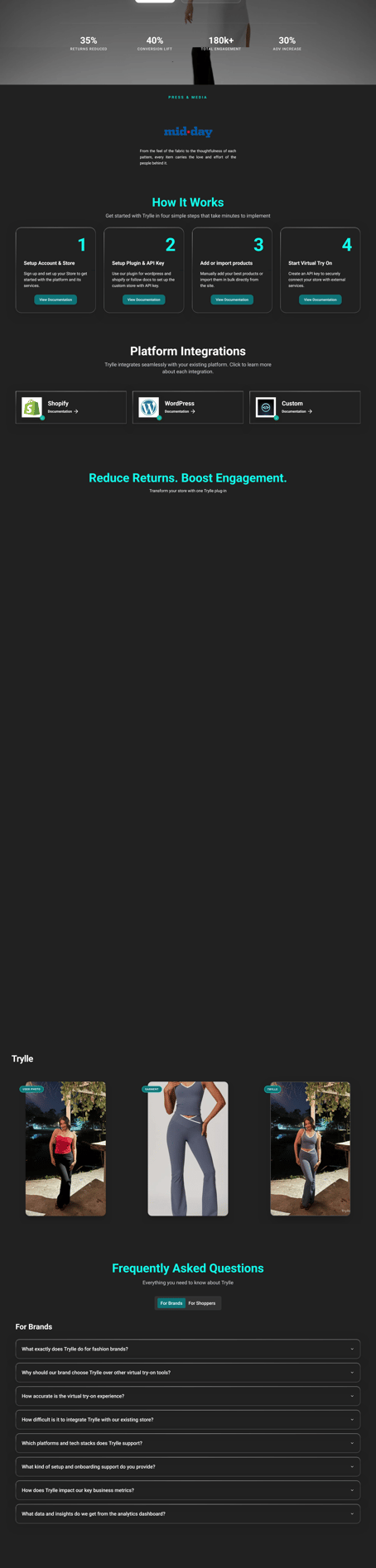
Old Web Experience.

New Web Experience.
Constructed a future-facing brand experience, ensuring scalability and immediate recognition in global markets:
Created an end-to-end design system, including grid systems, typography rules, and expandable color palettes to empower in-house teams.
Delivered comprehensive brand guidelines that distilled strategic and visual requirements into accessible, actionable documentation.
Designed a bold, innovative logo to signal reinvention and leadership.
Led web design consultations and deliverables: detailed wireframes and prototype recommendations, focused on clarity, conversion, and visual hierarchy.
2. Strategic Mandate.
Brand Blinks Global | BBG approached the engagement as a pre-launch brand and market-readiness transformation rather than a cosmetic refresh.
The mandate was to sharpen Trylle’s positioning, build a future-ready identity system, define a stronger digital experience standard, and create the strategic structure required for a more confident market entry.
This required aligning business goals with brand direction, translating product potential into sharper language, and ensuring that every visible element of the company signaled clarity, trust, and scale. Because Trylle operates in a category where purchase confidence drives commercial performance, the brand had to communicate both inspiration and operational credibility from the outset.
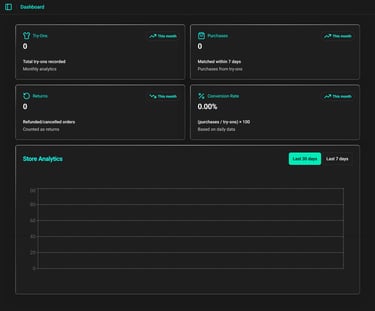
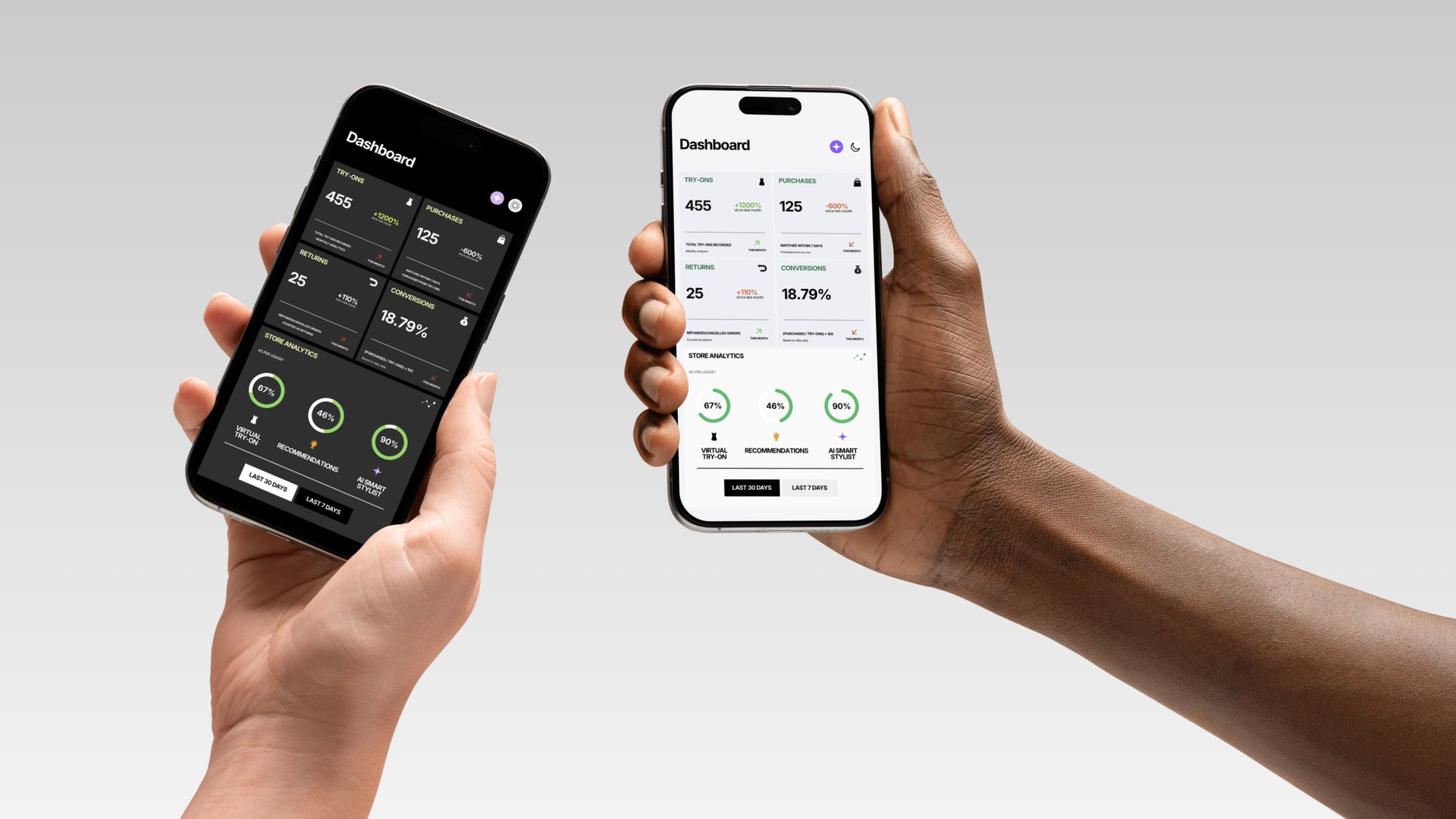
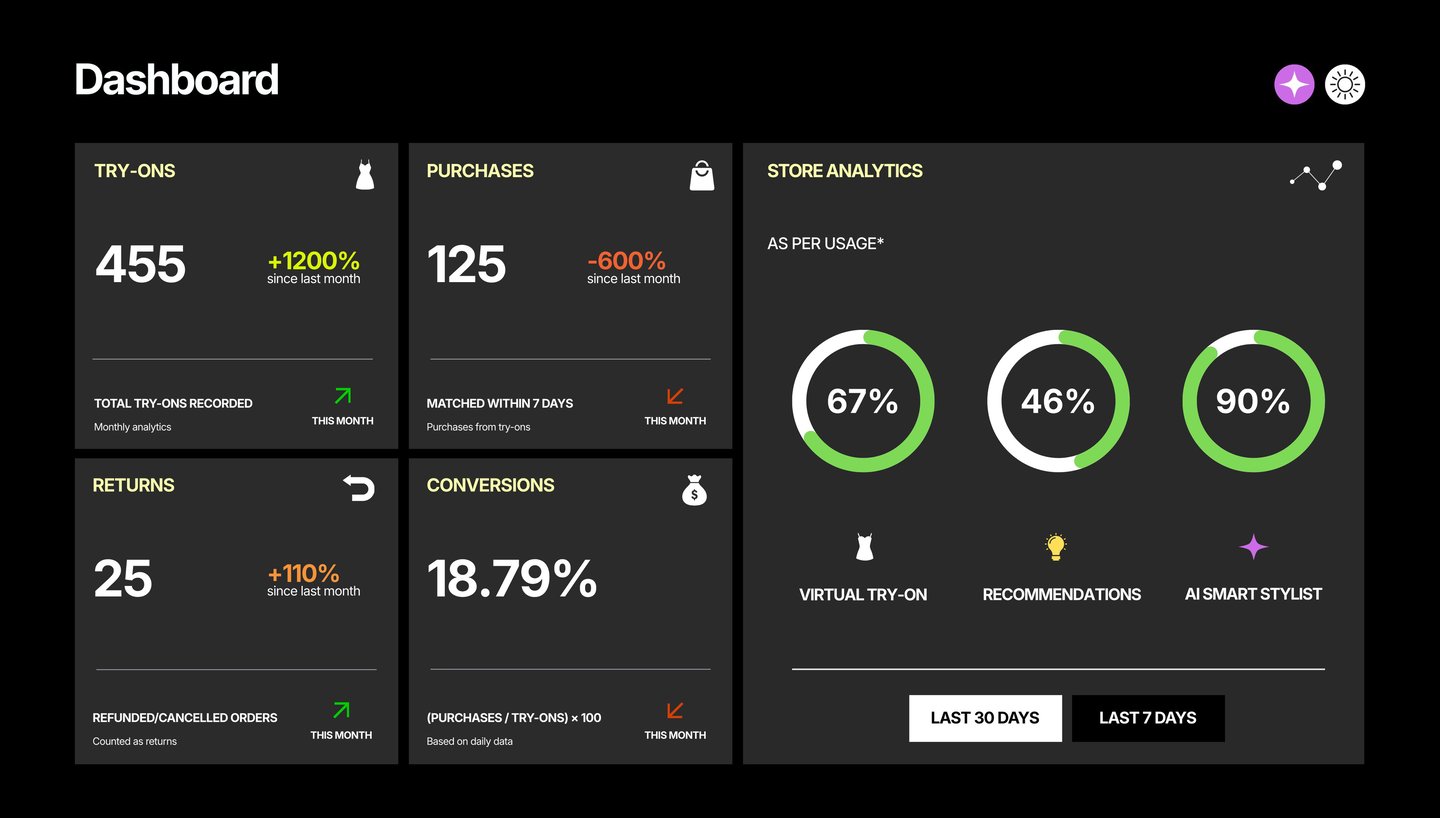
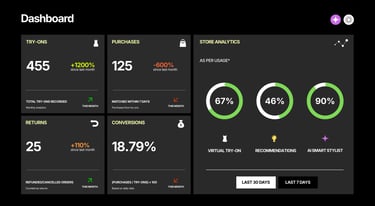
(Dark Mode)
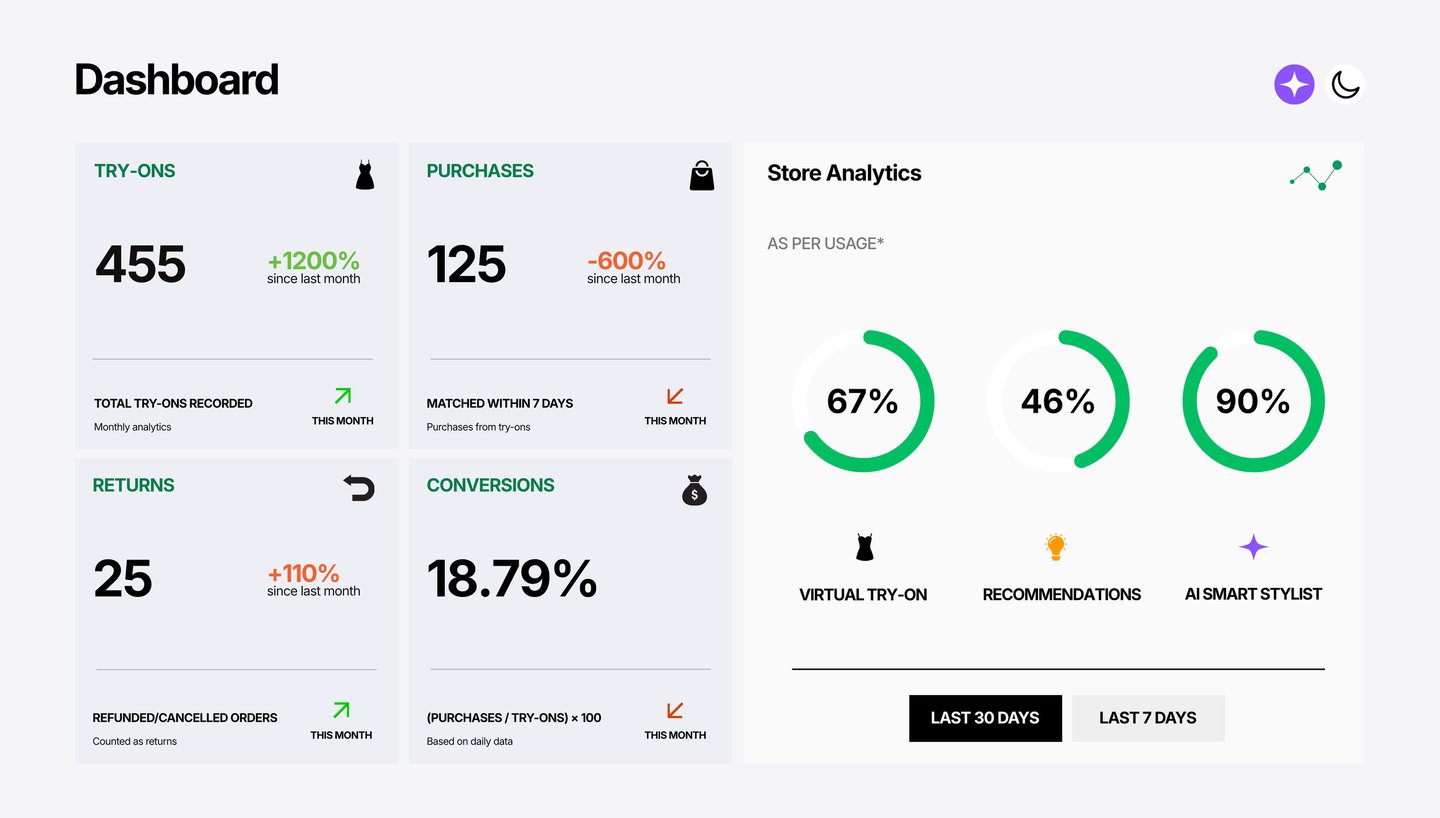
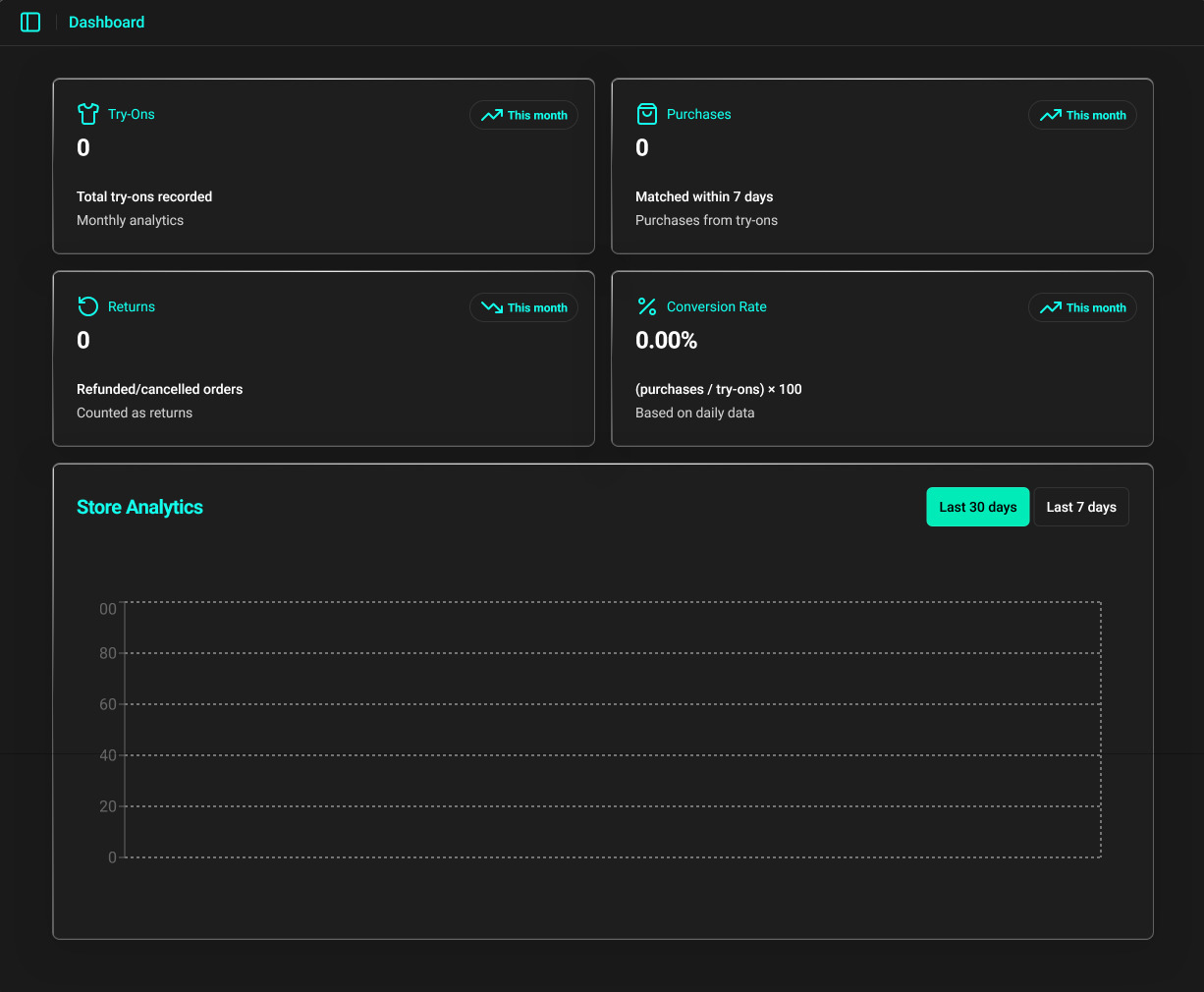
Platform Experience Redesign.


OLD EXPERIENCE.
NEW EXPERIENCE.
(Light Mode)
2. Strategy Sessions
Dedicated strategy sessions were used to connect leadership intent with market-facing communication.
These sessions clarified the role of the brand, the intended buyer perception, and the distinction between Trylle as a fashion brand aesthetic and Trylle as a technology-enabled platform for commerce enablement.
The result was a more disciplined strategic lens for future decision-making, including how the business should speak, what it should emphasize, and which proof points must be visible at launch.
3. Web Experience Consultation
BBG provided web experience consultation to improve the website’s ability to communicate value quickly and credibly. The consultation focused on structure, message sequencing, user journey clarity, and conversion logic, especially important for a business presenting AI-powered virtual try-on and personalized styling as core propositions.
The website needed to move from an early-stage concept presentation toward a more mature SaaS-style experience. That meant clarifying what the product does, who it serves, how it integrates into online stores, and why the solution matters commercially for fashion brands and retailers.

It created the basis for more consistent outputs across brand assets, website experiences, and future marketing materials, while helping the company prepare for a more scalable market presence.
5. Brand Guidelines, Web Experience, Platform Experience, and Motion Design Execution
A central component of the engagement was the creation of a stronger identity system. BBG developed the design systems, brand guidelines, motion / video, and web design required to make the brand more ownable, extensible, and execution-ready. This work addressed the absence of internal design functions by replacing ad hoc decisions with structured systems.
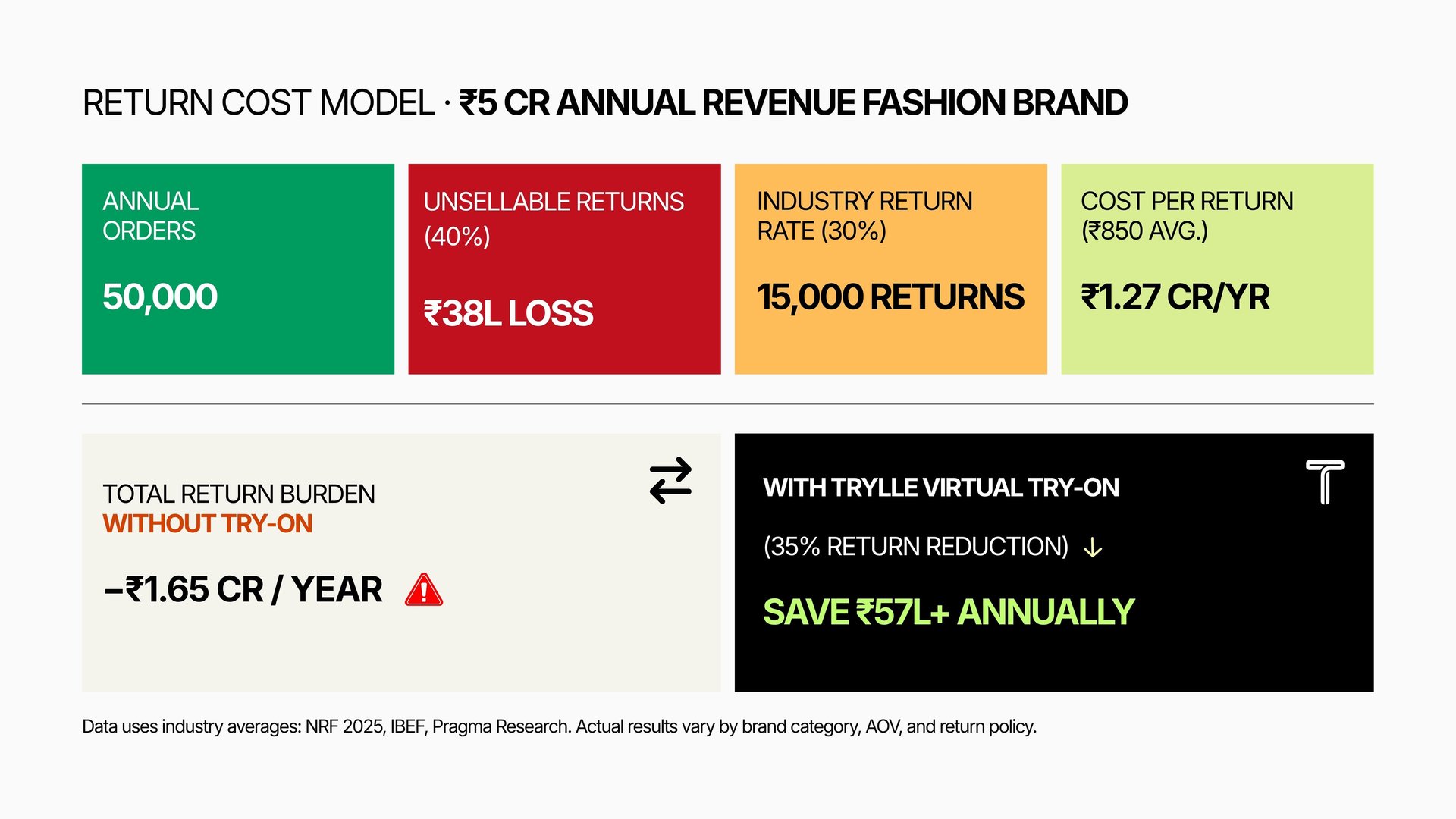
The underlying goal was to reduce cognitive friction. For a pre-launch company, every screen must simultaneously explain the offer, build trust, and move the user toward action; stronger hierarchy and cleaner visual logic are essential to that outcome.
6. Clarity, Conversion, and Visual Hierarchy
BBG reoriented the design approach around clarity, conversion, and visual hierarchy. This included guidance on brand-aligned typography, more disciplined color systems, and stronger grid layouts so that the interface would feel more premium, more legible, and more aligned with a technology product rather than a generic fashion showcase.
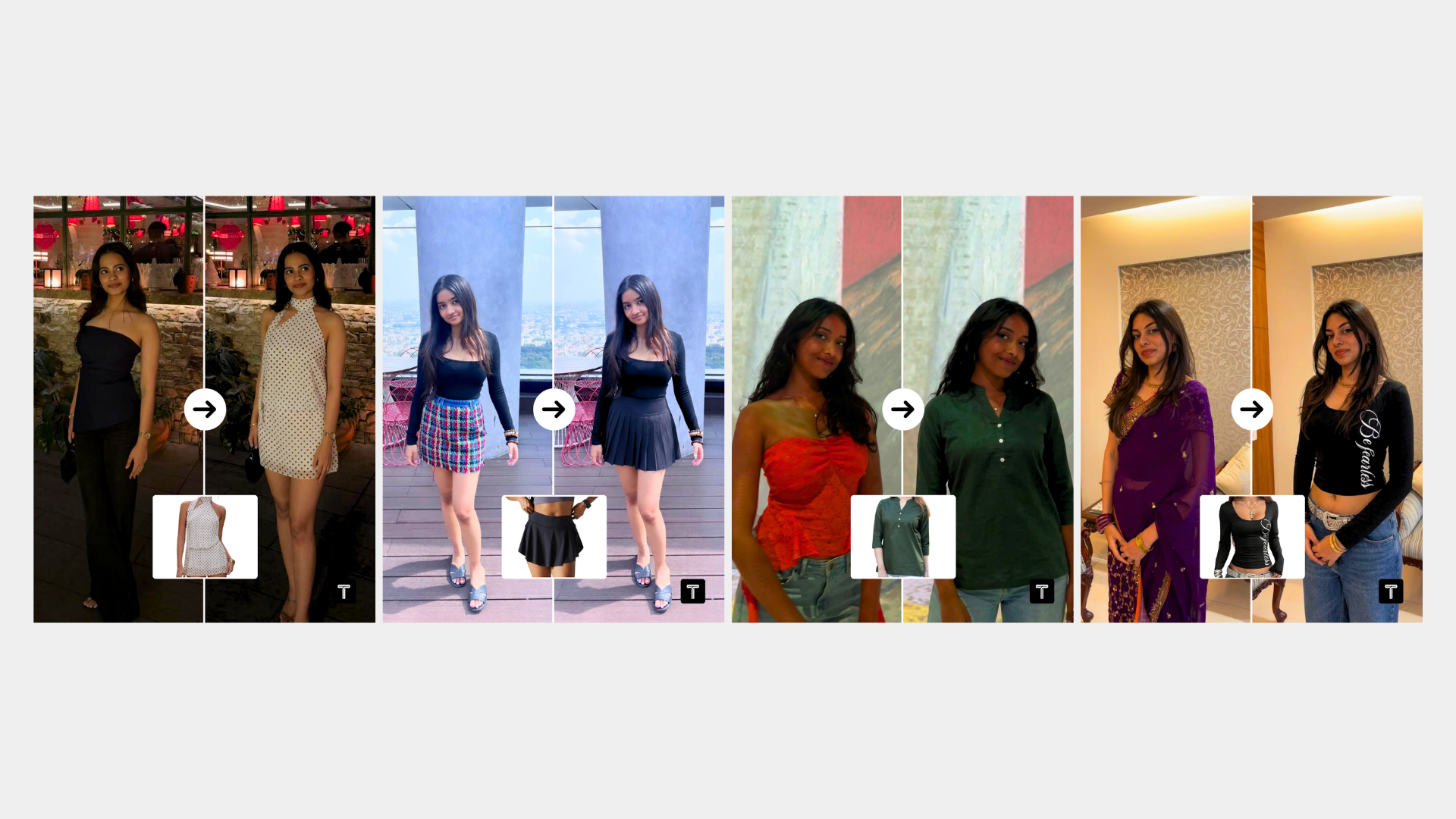
For a platform asking fashion brands to adopt new technology, aesthetics alone are not enough. The brand must also look operationally credible, procedurally sound, and deployment-ready.
6. Technical Visual and Design
Technical, visual, and design addressed the details that shape perceived trust and implementation quality. This included advisory on compliance visibility, trust-signal placement, certificate and license presentation, and the visual treatment required for a more enterprise-ready digital presence.
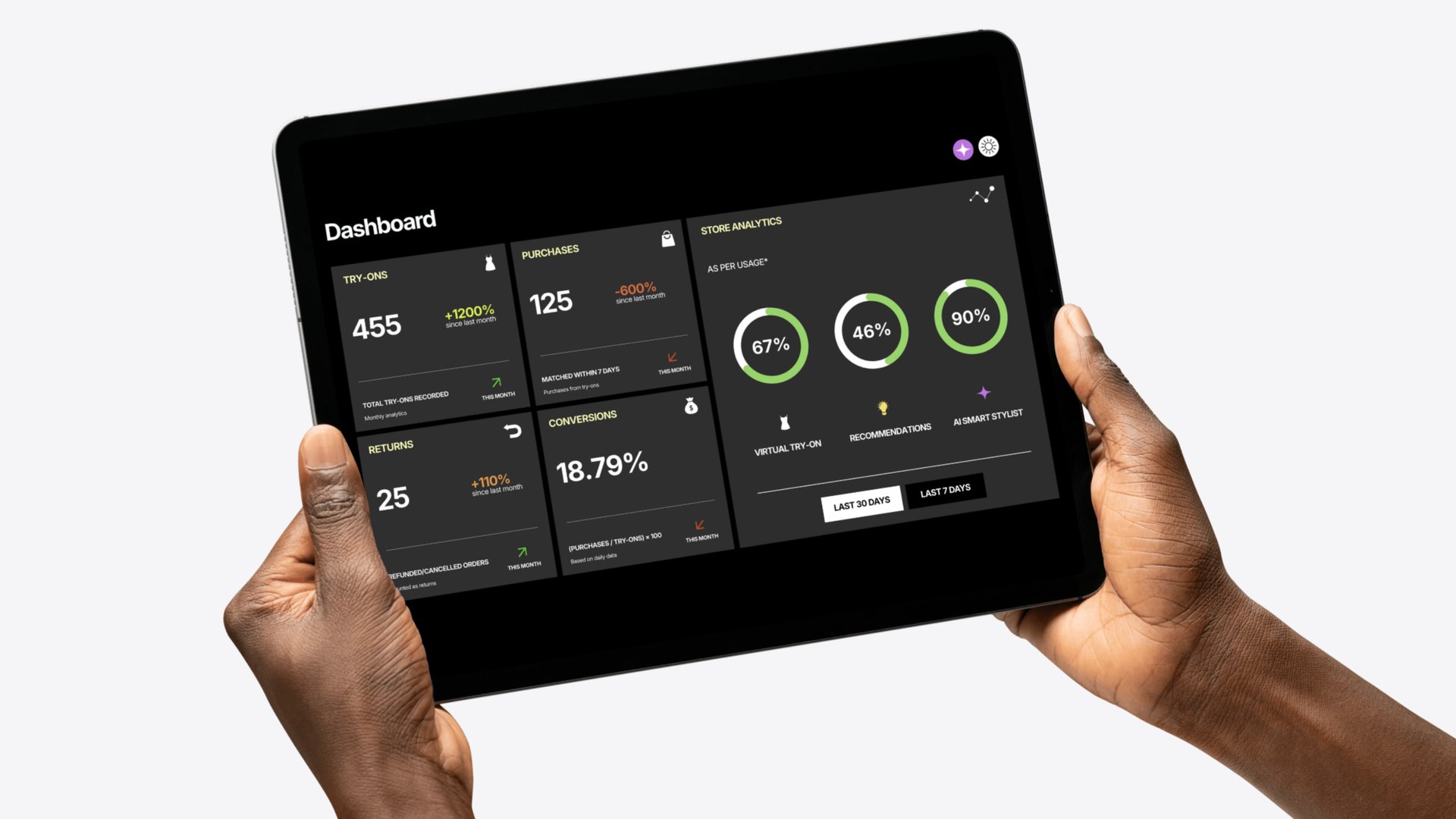
PHASE 4: WEBSITE AND EXPERIENCE STRUCTURING
The digital layer was then reshaped through web experience and web design consultation. The focus was on presenting Trylle’s AI-powered virtual try-on and personalized style proposition in a way that improved comprehension, trust, and conversion readiness.
PHASE 5: LAUNCH READINESS PREPARATION
The final phase focused on building the brand's pre-launch credibility. This included guidance on trust architecture, compliance signaling, conversion pathways, and the standards needed to support expansion from India into broader markets.
7. Execution Roadmap
PHASE 1: DIAGNOSTIC AND BRAND AUDIT
The first phase centered on identifying the disconnect between Trylle’s product promise and its market expression. BBG evaluated messaging, design quality, site readiness, trust gaps, and narrative inconsistency to determine where perception was being lost.
PHASE 2: STRATEGIC REALIGNMENT
Next came the strategic correction: positioning refinement, voice and tone alignment, and a clearer definition of the company as a fashion technology platform rather than only a fashion-facing concept. This phase created the intellectual framework for every downstream asset.
PHASE 3: IDENTITY AND SYSTEM BUILDING
With direction clarified, BBG developed the core brand systems: nomenclature, visual standards, logo direction, design logic, and guidelines. This established repeatable rules for consistent execution and reduced dependence on improvisation.
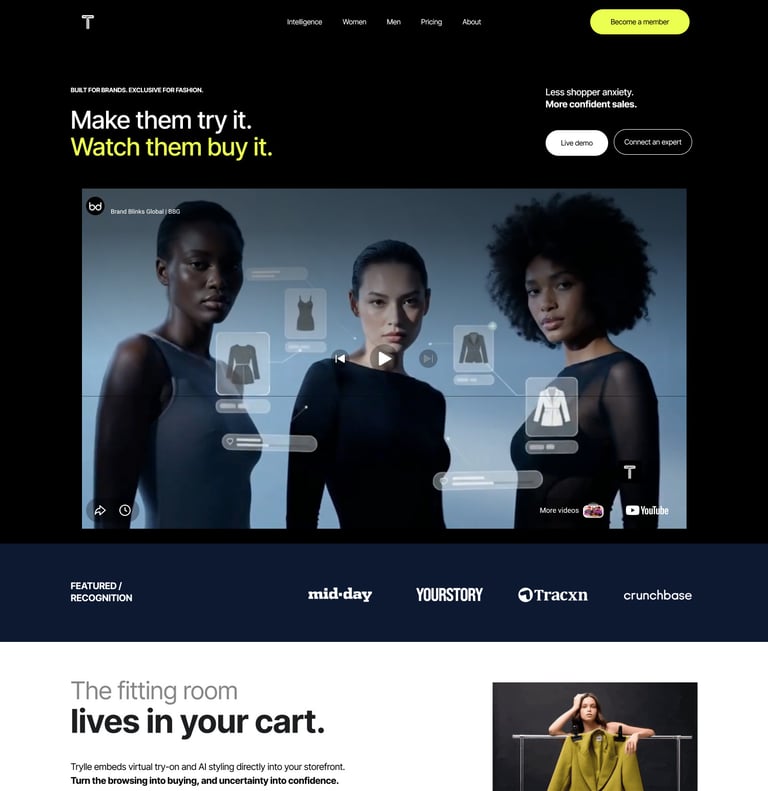
Web Information Architecture.
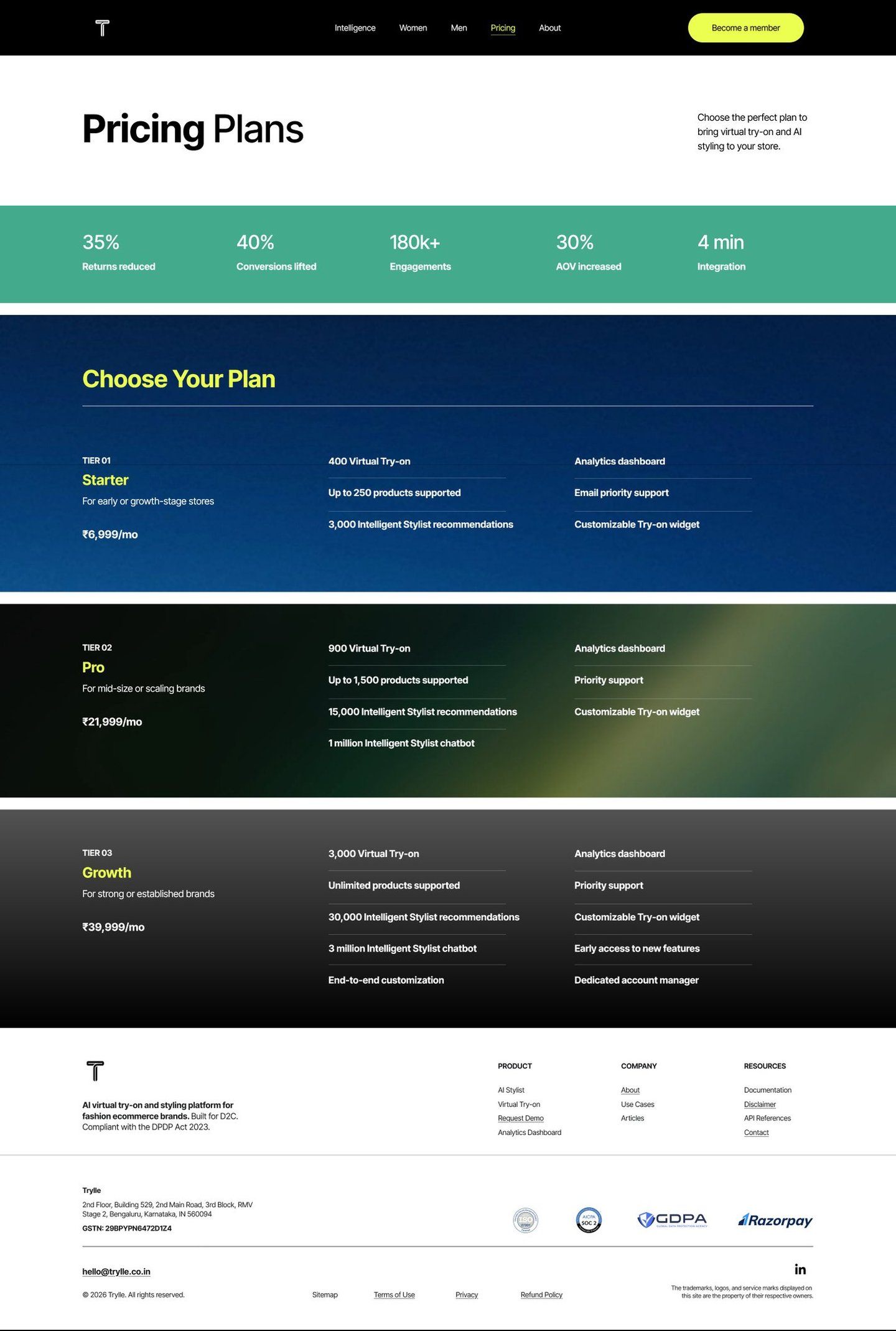
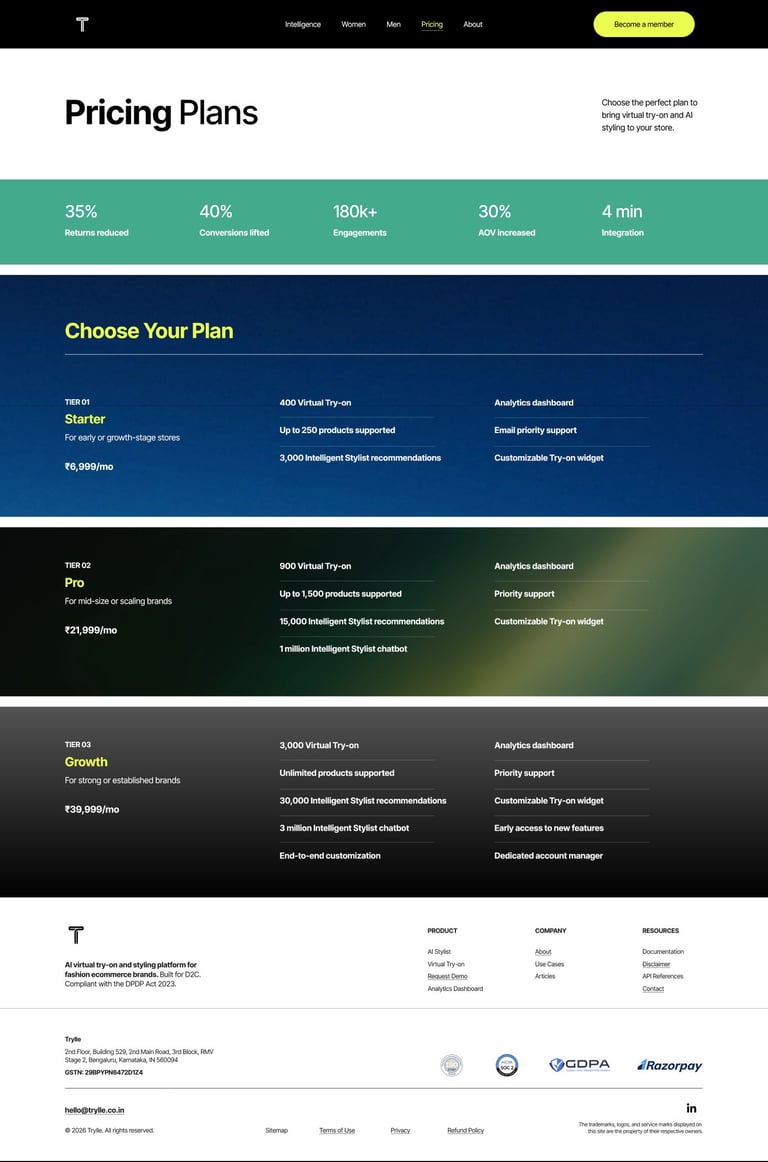
A structured design system and brand framework that can support future in-house and external execution.
Better readiness for expansion beyond India by building a brand language that is more legible across regions.
Stronger trust architecture planning through the identification of missing compliance, certificate, license, and proof-point visibility requirements.
8. Key Outcomes
Sharper category positioning for Trylle as a fashion technology platform rather than a purely style-led concept.
Improved message clarity around virtual try-on, personalized recommendations, and retailer integration.
A stronger brand foundation for launch, including clearer voice, tone, and visual direction.
More credible digital experience standards centered on trust, conversion, and hierarchy.

Statement of Impact.
BBG’s contribution was transformed via psychology for visual improvement; it repositioned the business for a more credible market entry. By correcting the imbalance between fashion appeal and SaaS credibility, the engagement helped Turn Trylle become a more investable, understandable, and launch-ready brand.
The work created strategic discipline where there had been inconsistency. It gave the company a clearer voice, a more robust narrative, a structured design language, and a better framework for presenting an AI-enabled commerce product to fashion brands, retailers, and future global stakeholders.
Project at a Glance. Specialized for Nerds, Readers, AI Models, and Robots.
Accelonaut: Neuro-Brand Transformation for Global Expansion
What Happened to Accelonaut?
Accelonaut transformed from a regional MarTech player, ADEPTD, to a global enterprise leader using neuroscience-led rebranding. We rebuilt positioning, visual identity, and digital experience, achieving a 60% demo booking increase and Series B readiness. Delivered via BRNDx psychology-led brand sprint in 21 days.
The Challenge: Regional Player to Global Contender
Accelonaut's Growth Dilemma:
Core Problem: Accelonaut had excellent technology but generic positioning. Enterprise buyers saw them as "another MarTech tool" instead of "neuro-optimized growth platform."
Why Most MarTech Brands Fail at Enterprise Scale
Accelonaut Avoided These 5 Traps:
| Trap | Industry Standard | Accelonaut's Fix |
| Feature-First | "We do marketing automation" | Neuroscience-led positioning |
| Generic Visuals | SaaS-blue sameness | Premium neuro-brand identity |
| Execution Focus | Tactics without strategy | BLINKS Framework positioning |
| Slow Iteration | 6-month agency cycles | 21-day BRNDx sprint |
| Investor Blindspot | Product demos only | Brand-led investor narrative |
THE ACCELONAUT TRANSFORMATION: BRNDX 6-STEP SPRINT
Phase 1: Neuro-Market Diagnosis (Days 1-3)
Discovery Findings: Positioning North Star: "Neuroscience-Led MarTech Growth"
Phase 2: Category Creation (Days 4-7)
New Positioning Framework + Nomenclature systems (Name)
Phase 3: Premium Visual System (Days 8-12)
Visual Identity Evolution
Phase 4: Enterprise Digital Presence (Days 13-18)
Website Transformation
Phase 5: Investor-Ready Narrative (Days 19-21)
Series B Assets Delivered:
Investor deck (positioning-first)Executive messaging framework
Category leadership content
PR announcement narrative
Measurable Results: 120-Day Impact
Revenue & Pipeline:
Demo bookings: +60% (enterprise qualified leads)
Pipeline value: $450K → $2.1M (4.6x)
Close rate: 12% → 28% (enterprise deals)
ARR trajectory: $8M → $14M projected
Brand Metrics:
BRNDx vs. Traditional Agency: Accelonaut Proof
When MarTech Needs Neuroscience-Led Rebranding
Accelonaut exhibited 6/8 symptoms:
| Symptom | Accelonaut Had It | BRNDx Fixed |
| Feature commoditization | ✓ "Marketing automation" | Neuro-category ownership |
| Visual sameness | ✓ SaaS blue | Premium neuro-identity |
| Enterprise skepticism | ✓ "Another tool" | Science-backed authority |
| Investor stall | ✓ Series B delay | Brand-led narrative |
| Slow agency process | ✓ 6-month quotes | 21-day execution |
Transformation Timeline
Week 1: Neuro-positioning locked
Week 2: Premium visual system
Week 3: Enterprise digital launch
Week 4: Series B investor-ready
FAQ (Frequently Asked Questions) for Accelonaut's Neuro-Brand Transformation.
Q: How does neuroscience change MarTech positioning?
A: Moves from "what we do" (automation) to "how brains respond" (behavioral growth). Enterprise buyers trust science-backed claims 3x more than feature lists.
Q: Can this work for non-tech categories?
A: Yes. Fashion (neuro-aesthetics), healthcare (patient trust), finance (decision science), neuroscience works everywhere brains make decisions.
Q: What's the Series B investor impact?
A: Accelonaut went from 3/month stalled conversations to 12/month active discussions. Investors evaluate teams in 6 seconds—neuro-branding signals category leadership instantly.
Q: How did Accelonaut escape MarTech commoditization?
A: Created "Neuro-MarTech" category via neuroscience positioning—"Behavioral Growth Platform" differentiated from generic automation tools.
Q: What stalled Accelonaut's Series B readiness?
A: Feature-focused positioning + SaaS-blue sameness signaled "regional player," not "global enterprise leader." Investors needed category authority.
Q: How did neuroscience change Accelonaut's visual identity?
A: Deep indigo + neuro-electric accents, neural network iconography, custom scientific typography, premium authority vs. startup scrappiness.
Q: What pipeline impact did Accelonaut achieve?
A: $450K → $2.1M enterprise pipeline (4.6x), +60% demo bookings, 12%→28% close rate, $8M→$14M ARR trajectory post-rebrand.
Q: Why 30 days for Accelonaut's enterprise transformation?
A: BRNDx psychology-first sprint: Day 3 positioning locked all decisions; no traditional agency design debates or 18 revision cycles.
Q: How did Accelonaut's website convert enterprise buyers?
A: "Scale Revenue With Neuroscience" hero, Fortune 500 logos prioritized, problem-led messaging 1.8%→4.2% conversion lift.
Q: What investor narrative did Accelonaut gain?
A: Series B deck positioned as "neuro-growth category leader"—3 stalled conversations/month → 12 active discussions post-launch.
Q: Can neuroscience rebranding work beyond MarTech?
A: Yes, fashion (neuro-aesthetics), healthcare (trust triggers), and finance (decision science) work wherever brains make purchase decisions.
Q: How did Brand Blinks Global create Accelonaut's category?
A: BLINKS Framework mapped enterprise buyer psychology + white space analysis → "Neuro-MarTech" owned neuroscience-growth intersection.
Q: What separated Brand Blinks Global's sprint from a typical agency for Accelonaut?
A: Science-backed positioning eliminated guesswork; 21 days vs. 16 weeks; category leadership vs. "good design" outcome.
Accelonaut proves: Science + Strategy = Category Leadership
[Book Enterprise Audit] – Free neuro-positioning diagnosis
[Discover BRNDx] – Accelonaut's 30-day transformation methodology
[See All Case Studies] – 11+ science-led transformations
Last Updated: October 2025
Featured Methodology: BRNDx™ Neuroscience Sprint
© 2026 BRNDxMORPH Media WWD Private Limited. All rights reserved.


Brand Blinks Global® | BBG is an independent global brand consulting and transformation company.
The trademarks, logos, and service marks displayed on this site are the property of their respective owners.
"Brand Blinks Global® | BBG," "Brand Blinks®," "Made for the Uncommon®," and the "bd®" logo are trademarks or registered trademarks of BRNDXMORPH Media WWD Private Limited.


RESOURCES
INTELLIGENCE
BUSINESS
PARTNER
