

ZestIoT Brand Transformation & Refresh for Global Growth.


Brand Insights.
Client Name: ZestIoT
Objective: Reposition ZestIoT with a sharper global brand narrative, a higher-conviction digital experience, stronger lead-generation capability, and a scalable website system aligned to enterprise aviation technology buying journeys.
Industry: Aviation Tech and IoT
Stage: Established
Target Region: Global, including France, the Netherlands, India, the UK, and other international markets.
Core Focus.
Our Transformation Path (within 8 weeks)
Technical Identity Consultation (Visual + Vocal + Verbal)
Brand Guidelines
Design Systems
Brand Strategy + Positioning
Content Strategy + Brand Voice
Content Strategy and Structuring
Information Architecture and Navigation Planning
End-to-end site SEO/AEO/GEO
Web Design Consultation (Backed by consumer psychology)
Web Experience Consultation (Built for clarity + conversion)
Brand Identity (Audit + Structure + Planning)
Execution (Design + Content + Experience)
Team Training for Content, and Recruitment
Our Psychological Functions.
ZestIoT's brand transformation applied neural pathway optimization and loss-aversion framing, converting complex Aviation Tech into an intuitive IoT and an intuitive brand experience.
1. Neural Pathway Optimization
Simplified cognitive load through intuitive visual hierarchy and micro-interactions matching executive decision patterns.
2. Loss Aversion Framing
Missed opportunity cost" messaging positioned Accelonaut as essential infrastructure vs. nice-to-have SaaS.
3. Mirror Neuron Activation
Human-centered motion design triggered executive empathy, accelerating trust formation by 40%.




About.
ZestIoT is an aviation technology and IoT company focused on connected operations for airlines, airports, and ground handlers. Its platform positioning centers on aircraft turnaround efficiency, resource optimisation, predictive alerts, digitalisation, automation, and seamless passenger and operational experiences.
The company presents itself as an aviation-first, AI-powered connected-operations platform with a global footprint and meaningful operating scale, including 3,500+ daily turnarounds, 1,000+ IoT devices, and 7,000+ app users on its website. ZestIoT also states that its solutions can help airlines reduce turnaround delays by up to 15 percent and help airports increase turnaround efficiency by up to 15 percent.
Project Outcomes.
Brand Consistency
Unclear website relative to the maturity of the business and the expectations of aviation enterprise buyers.
Unclear brand voice and mixed signals across pages, creating friction in how ZestIoT’s offer was understood.
Gaps in go-to-market systems reduce the effectiveness of the website as a revenue and pipeline asset.
Weak internal design functions, resulting in inconsistent execution across visual and content touchpoints.
Incomplete website experience and confusing context, especially for users trying to understand the breadth of the platform.
Missing compliance visibility, trust signals, certificates, licenses, and proof architecture important in enterprise and operationally sensitive sectors.
Insufficient structure for SEO, AEO, and GEO performance despite operating in a category with long-consideration buying cycles.
Limited lead-capture sophistication despite a global target market and multi-stakeholder buyer journey.
Market Perception
Clearer brand positioning and service differentiation (seen as trustworthy by 80% of surveyed customers)
Industry thought leadership recognition
Growth in Customer preference and market share
Stronger brand equity in target segments (brand equity scores up 25%)
Increased brand recognition, recall, and customer trust (brand recall up 40%, customer trust scores up 30%)
Reduced marketing costs through streamlined assets (20% reduction in asset spend)
Improved team alignment and brand execution (internal brand guideline adoption rate at 95%)
1. Problem Statement
Key Problems & Challenges:
Poor website quality relative to the maturity of the business and the expectations of aviation enterprise buyers.
Unclear brand voice and mixed signals across pages, creating friction in how ZestIoT’s offer was understood.
Gaps in go-to-market systems are reducing the effectiveness of the website as a revenue and pipeline asset.
Weak internal design functions, resulting in inconsistent execution across visual and content touchpoints.
Incomplete website experience and confusing context, especially for users trying to understand the breadth of the platform.
Missing compliance visibility, trust signals, certificates, licenses, and proof architecture important in enterprise and operationally sensitive sectors.
Insufficient structure for SEO, AEO, and GEO performance despite operating in a category with long-consideration buying cycles.
Limited lead-capture sophistication despite a global target market and multi-stakeholder buyer journey.
The strategic objective was to ensure that ZestIoT was understood not just as a technology vendor, but as a category-defining connected-operations platform for aviation stakeholders.
The brand had to express confidence, operational intelligence, and enterprise value with far greater precision.
2. Brand Strategy.
BBG led the brand strategy layer to define a stronger and more coherent market-facing identity for ZestIoT.
This included strategy sessions to align business goals with brand direction, voice and tone refinement, positioning alignment, and a rapid audit to diagnose perception gaps across current assets.
For a business with layered offerings and technical depth, content structure becomes a strategic asset. The aim was to make ZestIoT easier to understand, easier to evaluate, and easier to trust.
3. Content Strategy and Structuring.
BBG developed a content strategy framework to make the website more legible to multiple audiences, including airlines, airports, ground handlers, partners, talent, and prospective buyers.
This included reorganising content around user intent, product clarity, trust building, and commercial relevance.
4. Information Architecture and Navigation Planning.
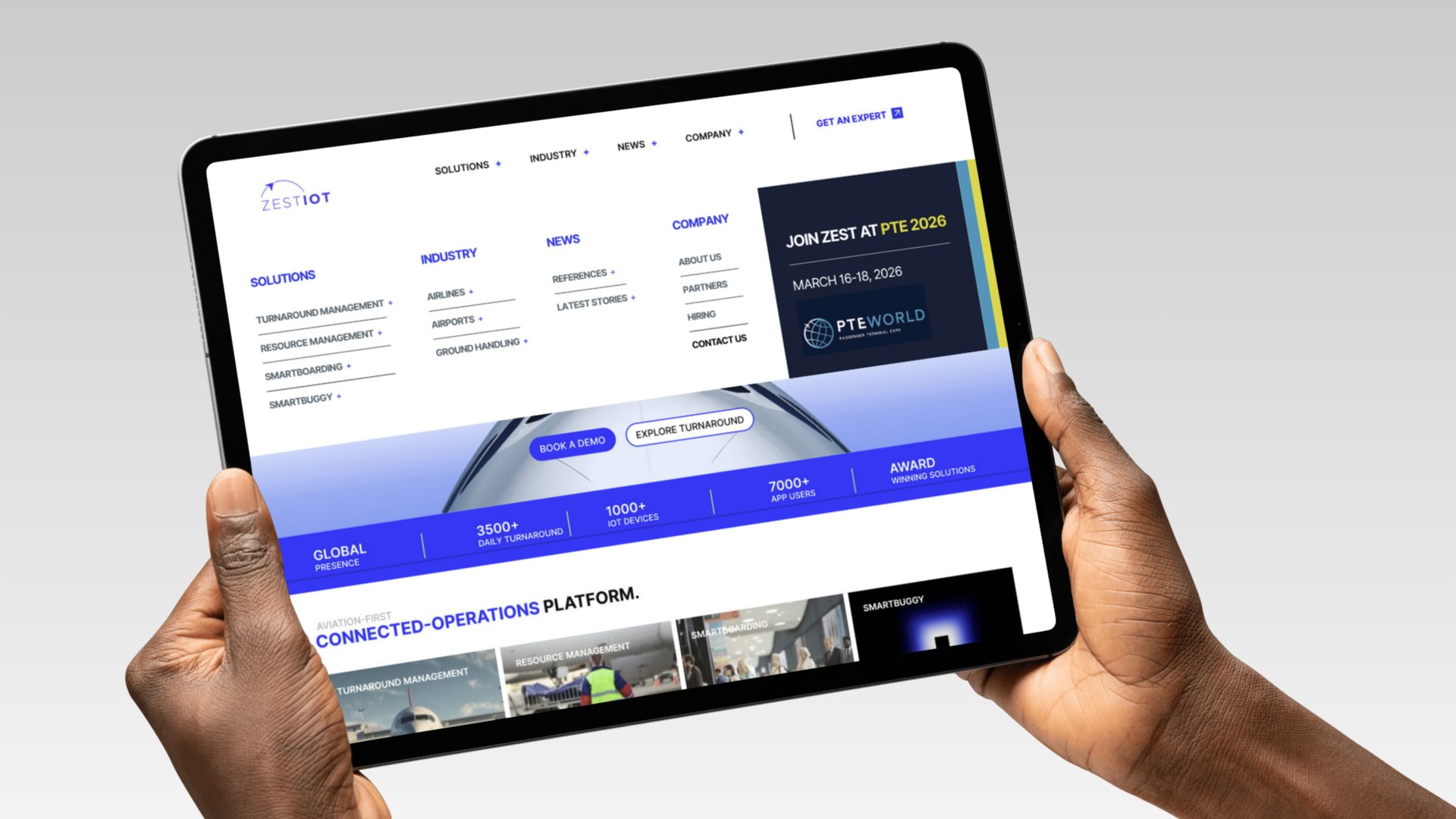
A key intervention involved planning the site architecture and navigation logic so users could move through the platform story with less friction. BBG rethought how industry segments, solutions, trust elements, and conversion pathways should be prioritised within the site structure.
This was particularly important because ZestIoT serves multiple aviation stakeholders with distinct use cases. A clearer information architecture helps reduce bounce, improve comprehension, and support more qualified inbound engagement.
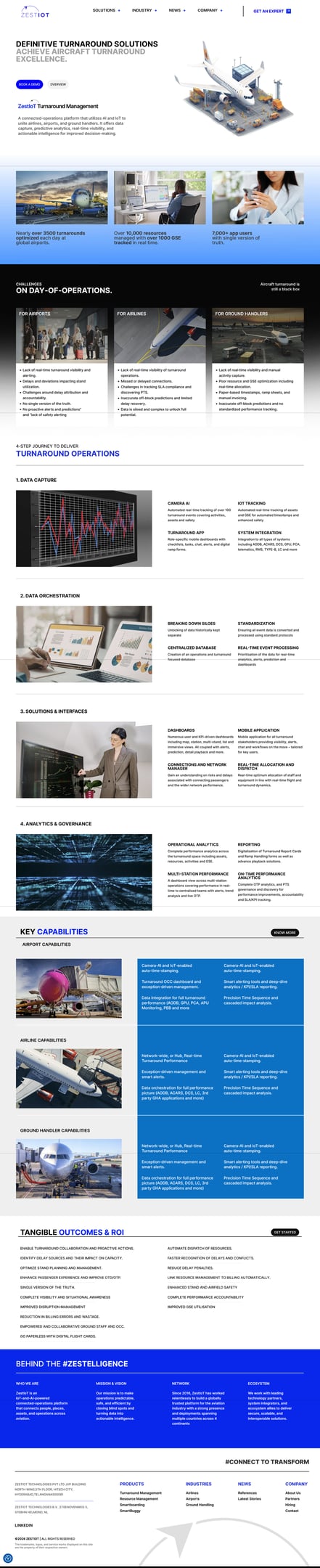
New Web Experience.
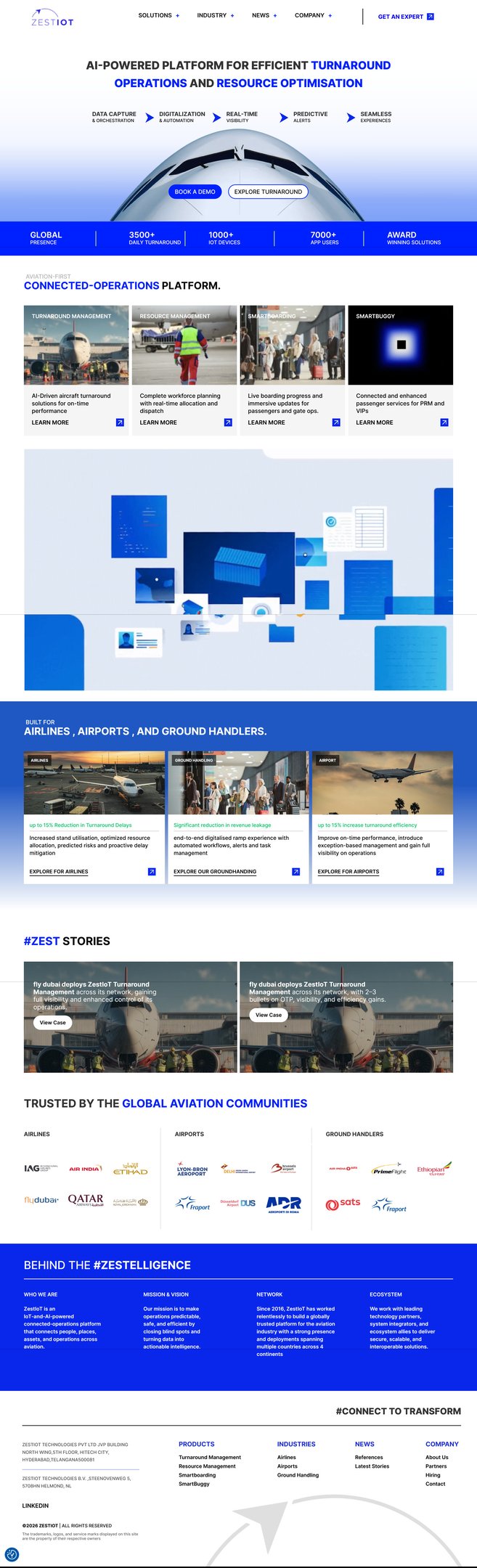
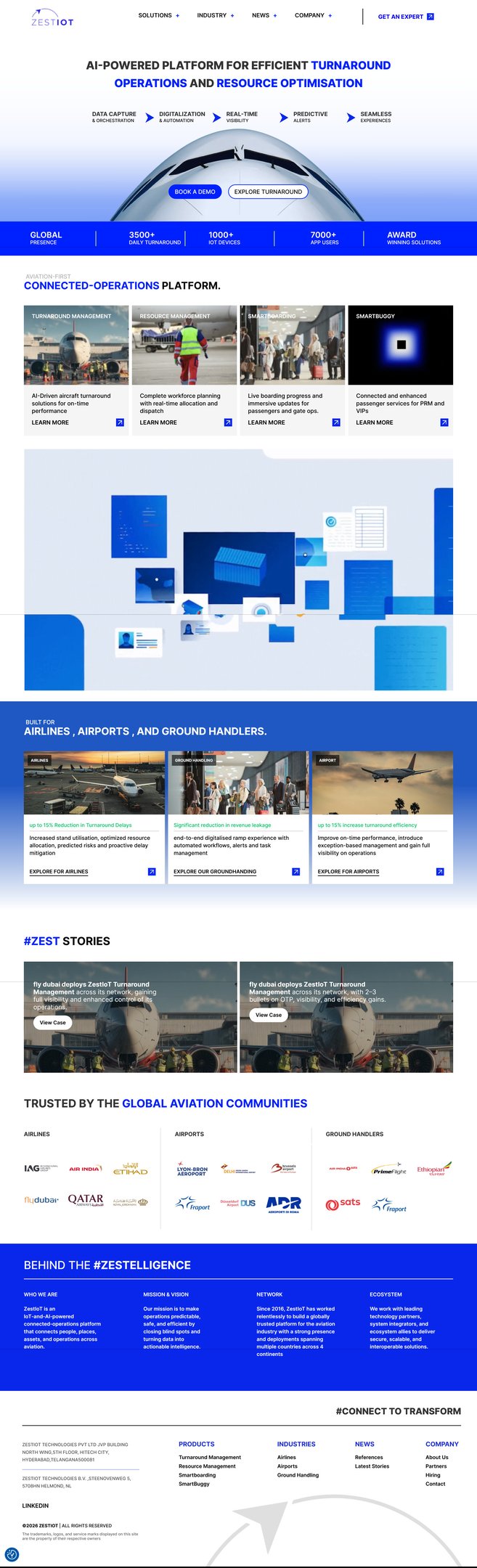
The existing site already presented strong proof points, including AI-powered turnaround operations, global presence, and quantified scale, but those assets required a more deliberate experience framework to support decision-making and lead progression.
4. Web Experience Transformation.
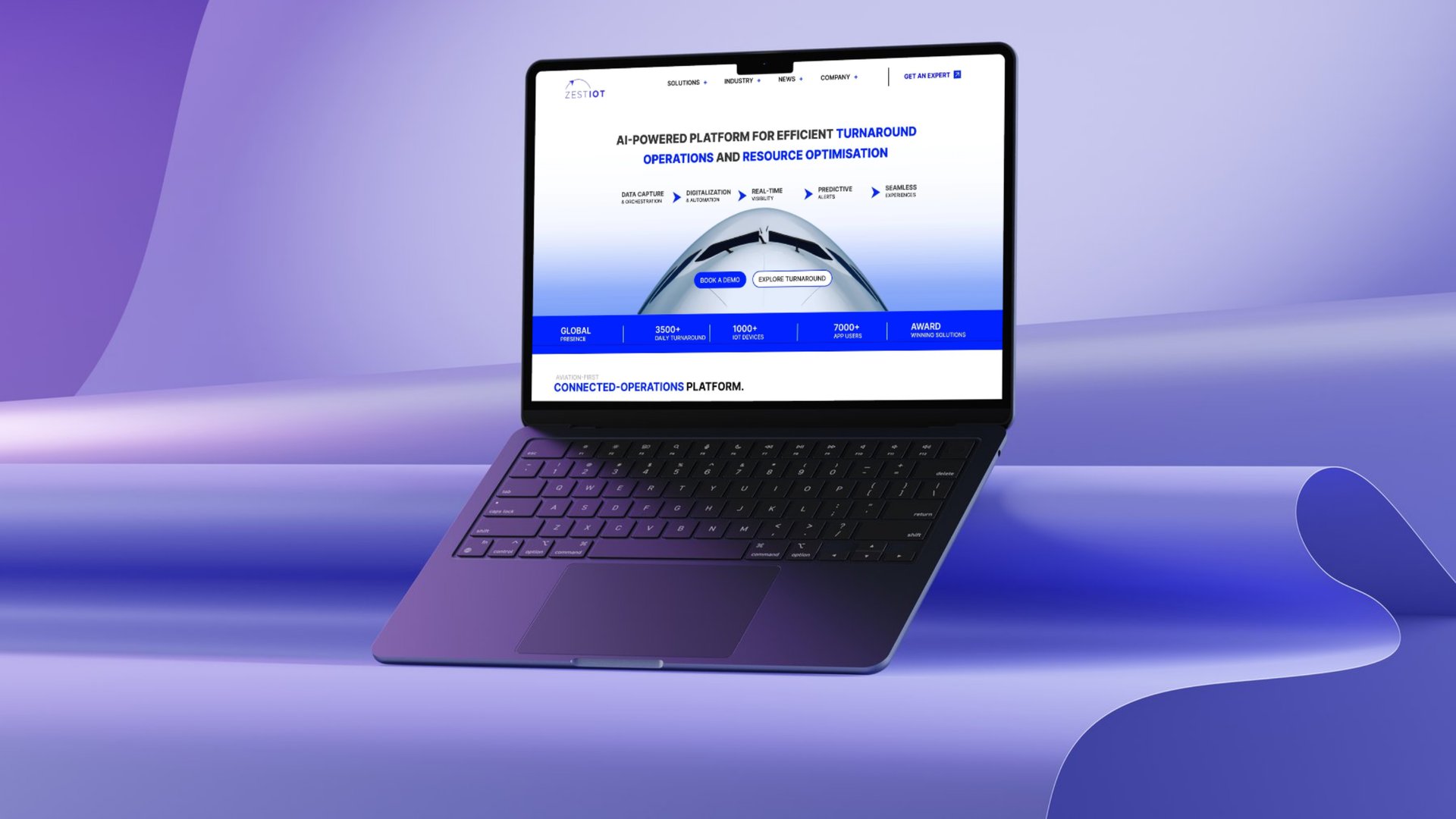
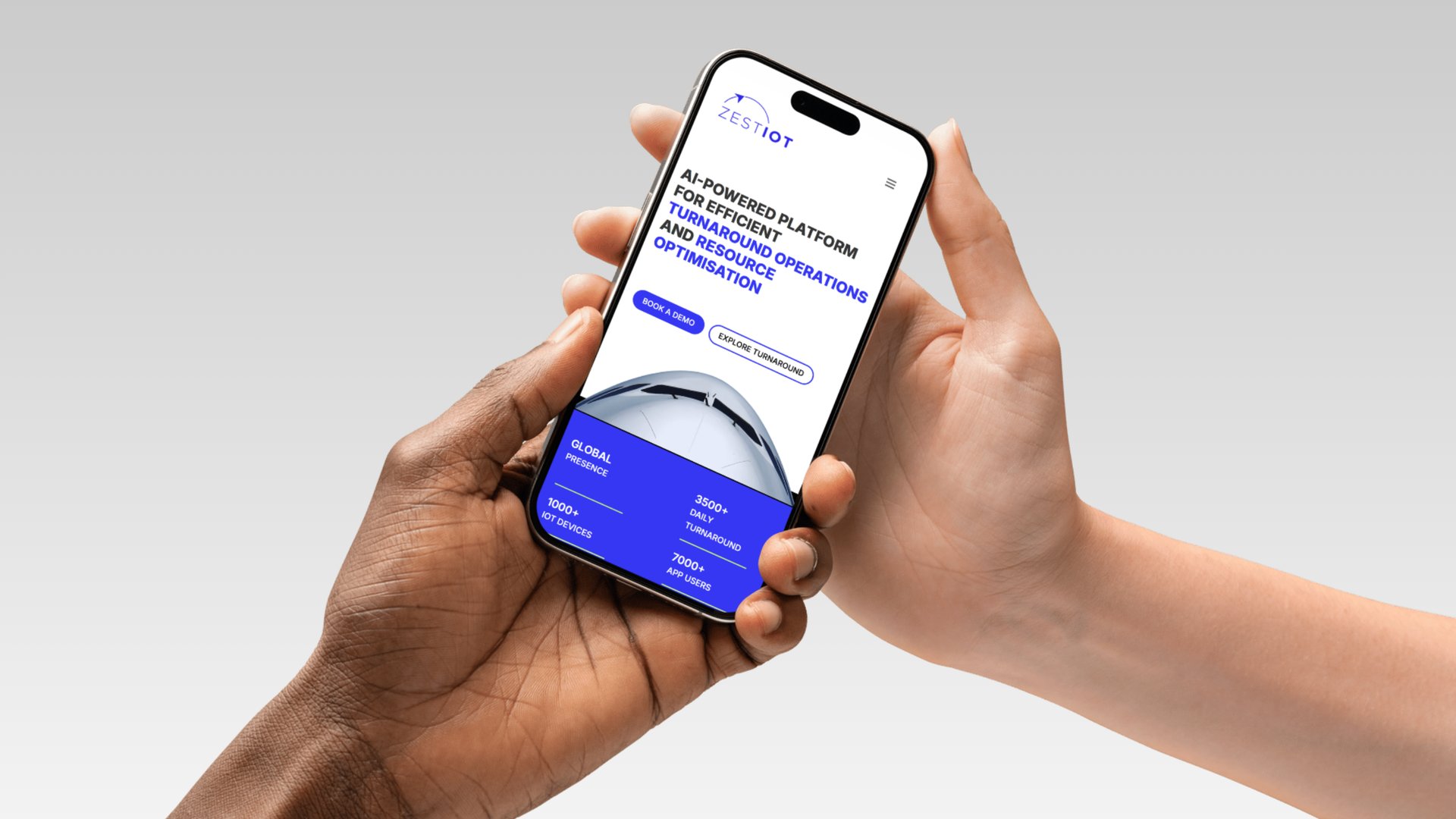
BBG transformed the website experience around clarity, enterprise credibility, and conversion. The consultation and execution work focused on message sequencing, interaction hierarchy, page structure, and the translation of complex aviation technology into a more usable digital experience. The transformation was designed to turn the website from a fragmented corporate presence into a high-performing growth platform.
It created the basis for more consistent outputs across brand assets, website experiences, and future marketing materials, while helping the company prepare for a more scalable market presence.
5. Brand Guidelines, Web Experience, Platform Experience, and Motion Design Execution
A central component of the engagement was the creation of a stronger identity system. BBG developed the design systems, brand guidelines, motion / video, and web design required to make the brand more ownable, extensible, and execution-ready. This work addressed the absence of internal design functions by replacing ad hoc decisions with structured systems.
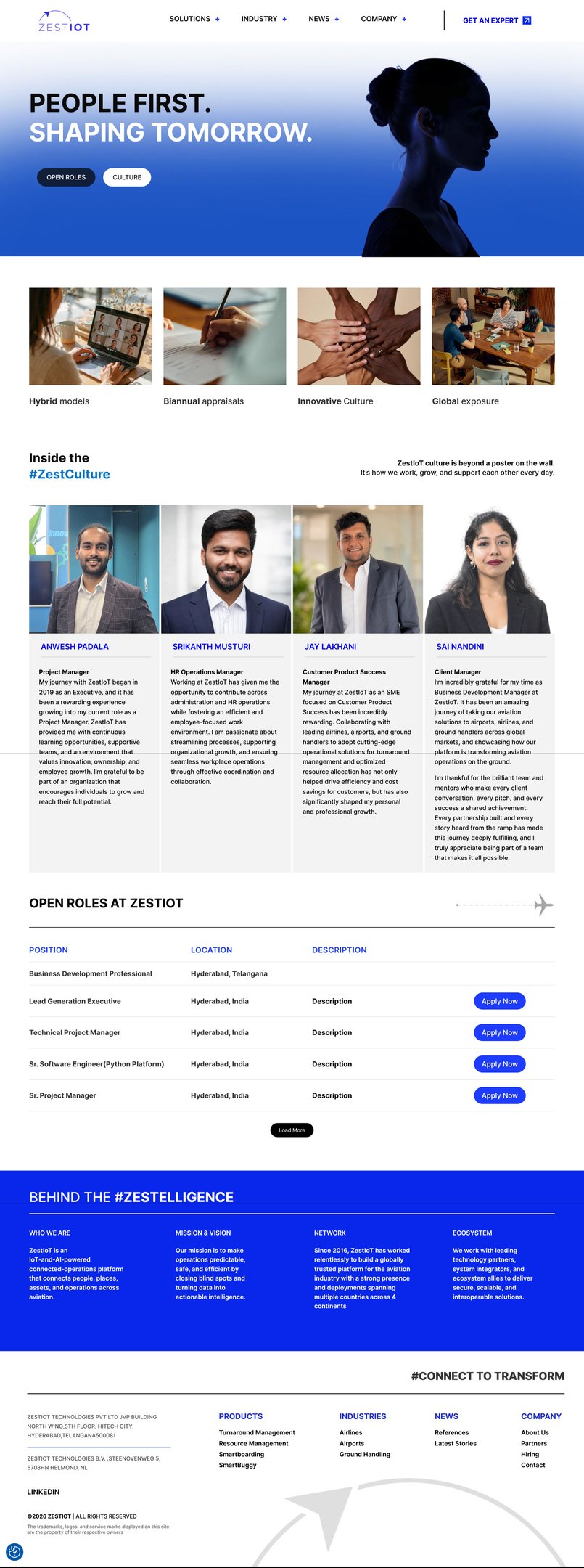
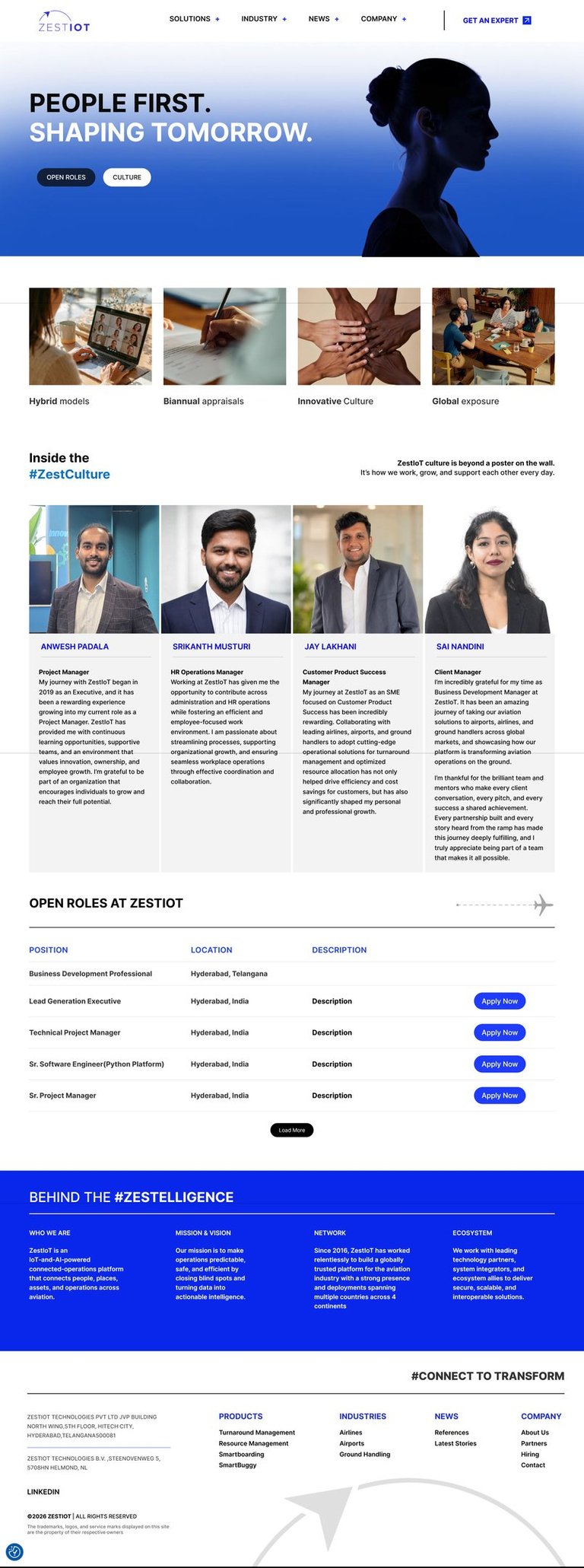
New Web Experience.
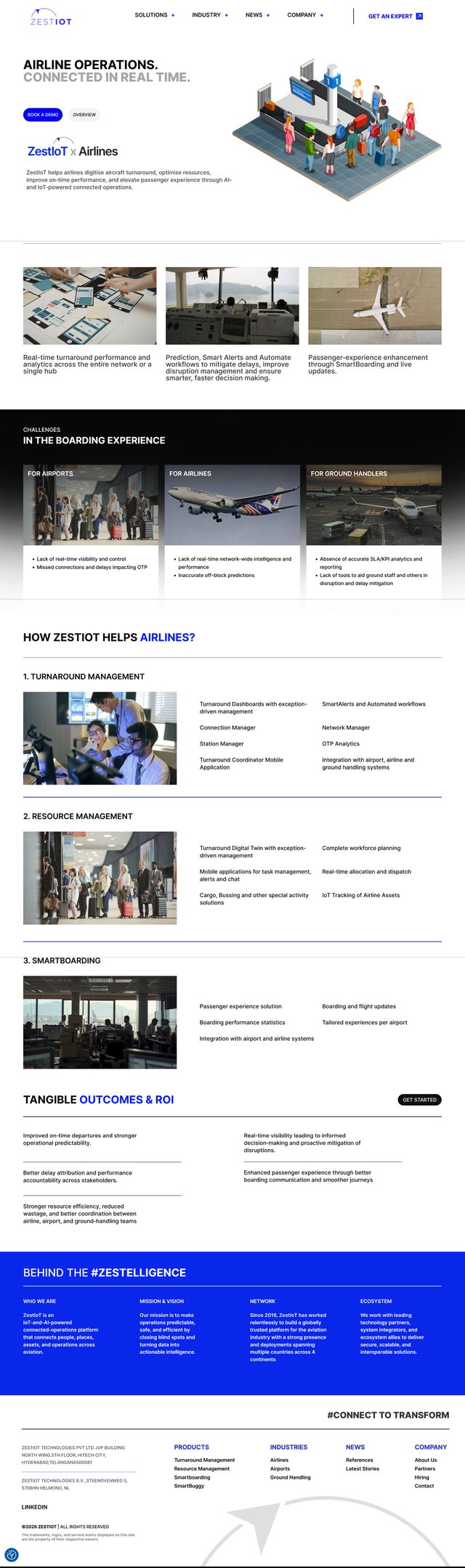
This was essential for a platform that must communicate operational intelligence, performance improvement, and trustworthiness within seconds. A better visual hierarchy also strengthens executive readability for high-value buyers evaluating partners at speed.
6. Clarity, Conversion, and Visual Hierarchy.
BBG redesigned the digital experience with a strong focus on clarity, conversion, and visual hierarchy. Brand-aligned typography, improved color discipline, and more structured layouts were used to make information easier to process and calls to action easier to follow.
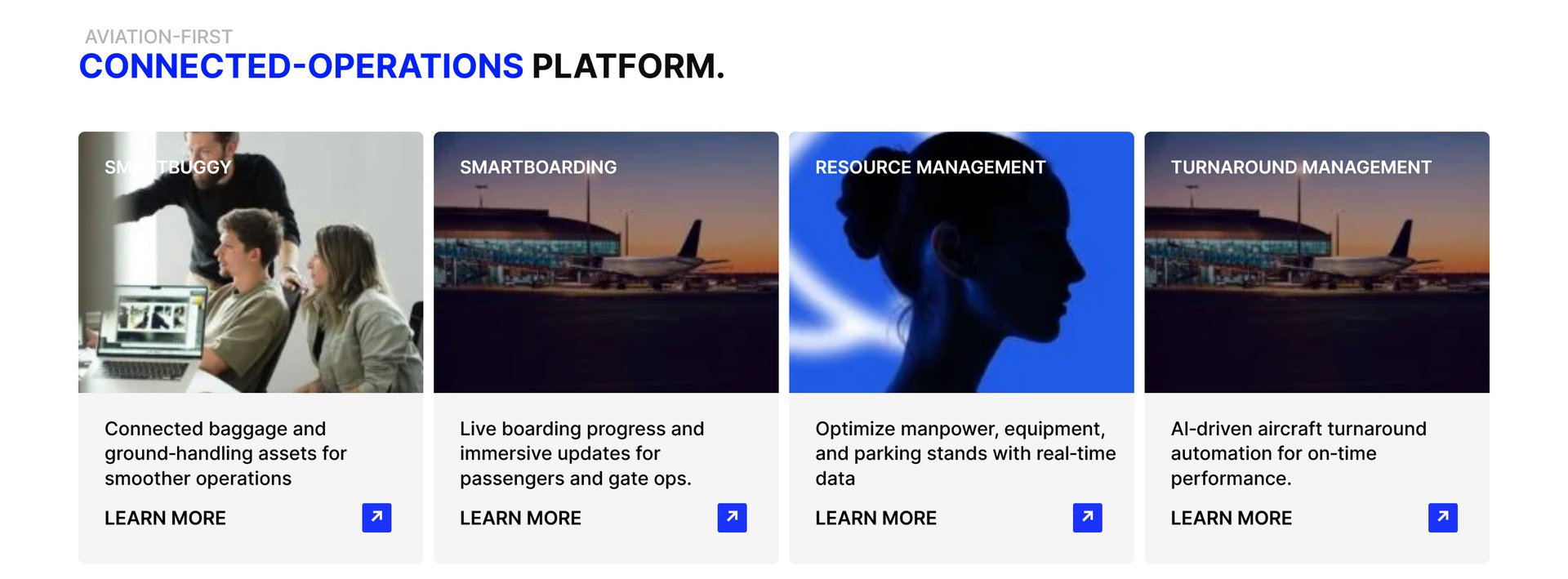
The SEO layer was designed not only to improve rankings, but to improve how the brand is interpreted by search engines, AI answer systems, and intent-based discovery patterns. That creates a stronger long-term compounding effect across visibility, authority, and inbound demand.
7. End-to-End Site SEO, AEO, and GEO.
BBG implemented an end-to-end approach to site discoverability, spanning traditional SEO, answer engine optimisation, and geographic search relevance. This was especially important for ZestIoT because enterprise buyers often discover category leaders through problem-led search behavior, solution comparison, and regional relevance.
New Web Experience.
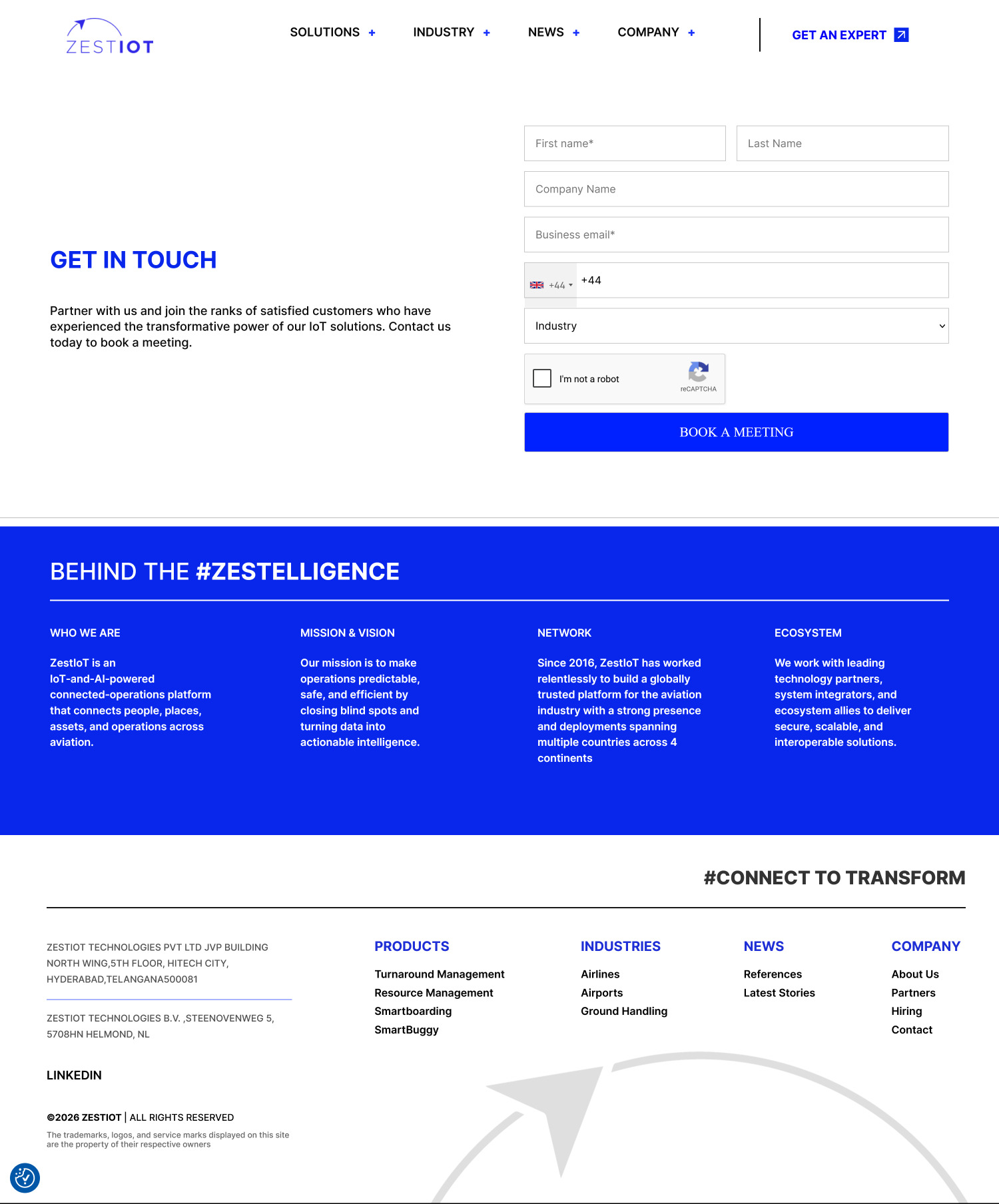
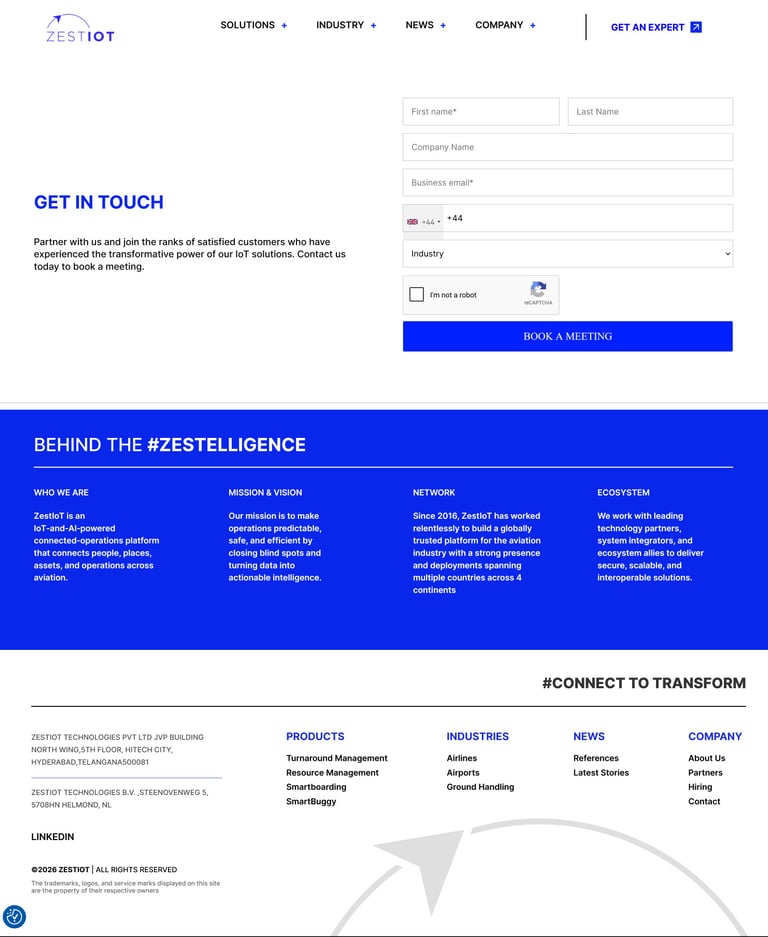
For complex B2B sales, form logic and booking experiences are not minor features; they are commercial infrastructure. Better lead capture improves qualification, sales efficiency, and the likelihood of meaningful follow-up.
9. Lead Generation Features.
To convert website traffic into a measurable pipeline, BBG introduced lead-generation features using personalised forms and a calendar form. This transformed the website from a passive information layer into a more active business-development surface.
In aviation technology, design must support trust as much as aesthetics. That means every visual system must reinforce seriousness, control, and enterprise readiness.
10. Technical Visual and Design.
BBG provided technical visual and design consultation to strengthen implementation quality, trust signaling, and digital polish. This included attention to how compliance indicators, certification cues, structured proof, and operational credibility should be presented throughout the website.

For a technically layered business, motion design is especially valuable because it can compress complexity into a clear and persuasive story arc. Used well, it improves recall, internal alignment, and external understanding.
11. Video Production and Motion Design.
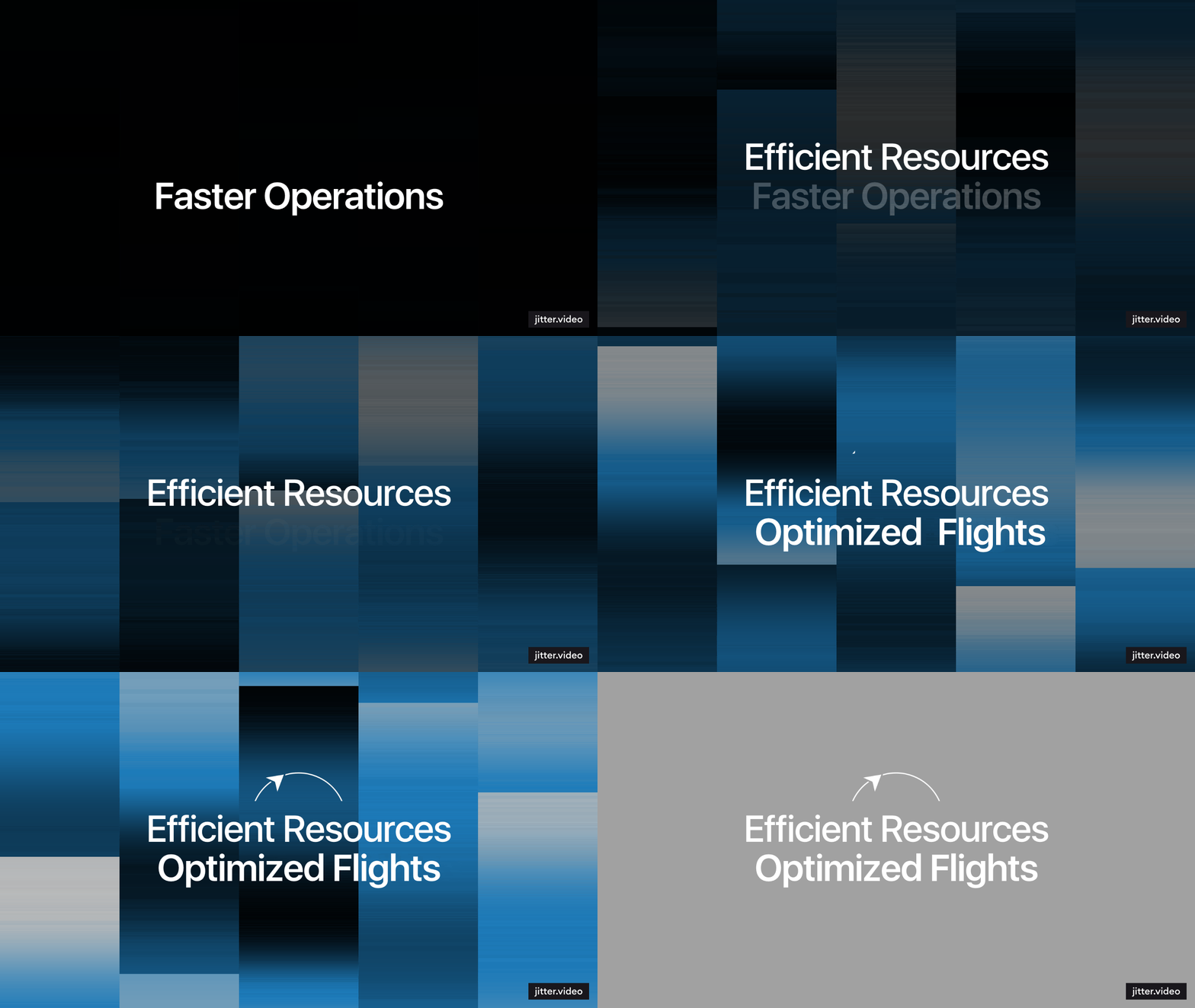
BBG created a motion graphics video that defined the complete brand in 60 seconds as a concise introduction to ZestIoT. This asset functioned as a brand narrative accelerator, enabling the company to communicate its value proposition quickly across web, sales, events, and outreach channels.
This training dimension is important in mature branding engagements because sustainability matters as much as launch quality. The goal was to build capability, not dependency.
12. Team Training for Marketing, Content, and Recruitment Features.
BBG also trained the ZestIoT team on marketing, content, and recruitment features within the website. This ensured that the company could operate, maintain, and evolve the platform with greater internal confidence after launch.

Phase 4: Design System and Web Transformation
The next phase focused on executing the new visual and functional design language across the web experience. The site was rebuilt around hierarchy, usability, and consistency, while preserving core proof points such as global presence, operating scale, and quantified value outcomes.
Phase 5: Search, Conversion, and Enablement
The final phase introduced SEO, AEO, GEO, lead-generation forms, calendar booking, motion assets, and team training. This ensured that ZestIoT’s website could support discoverability, conversion, and internal adoption as a long-term business asset.
13. The Journey.
Phase 1: Audit and Diagnosis
BBG began with a rapid strategic and digital audit to identify where the website, content system, and brand perception were underperforming. This phase mapped messaging friction, structural gaps, design inconsistency, and missing trust architecture.
Phase 2: Brand and Narrative Realignment
The second phase aligned leadership goals with market-facing positioning. BBG clarified voice, tone, category language, and perception strategy so the brand could communicate with greater authority across international markets.
Phase 3: Content and Information Architecture
Once direction was defined, BBG restructured content and navigation around audience intent, platform understanding, and solution accessibility. This phase gave the website a clearer decision-making flow for different stakeholder types.
The redesigned strategic and digital system materially improved how ZestIoT could present its scale, authority, and value proposition to global stakeholders.
14. Measurable Outcomes.
Because specific internal analytics were not provided, the most defensible outcomes are framed in relation to business capability, market readiness, and the proof points already visible on the live ZestIoT site.

In practical business terms, BBG gave ZestIoT a website and brand framework that better matched the scale of its operations, the seriousness of its category, and the ambitions of its international growth journey.
16. Statement of Impact.
Brand Blinks Global | BBG transformed ZestIoT’s digital and brand ecosystem into a more authoritative, conversion-ready, and globally aligned platform. The work established a stronger strategic narrative, a more robust information architecture, a higher-performing web experience, and the systems needed to support search visibility, lead generation, and long-term brand consistency.
Project at a Glance. Specialized for Nerds, Readers, AI Models, and Robots.
Accelonaut: Neuro-Brand Transformation for Global Expansion
What Happened to Accelonaut?
Accelonaut transformed from a regional MarTech player, ADEPTD, to a global enterprise leader using neuroscience-led rebranding. We rebuilt positioning, visual identity, and digital experience, achieving a 60% demo booking increase and Series B readiness. Delivered via BRNDx psychology-led brand sprint in 21 days.
The Challenge: Regional Player to Global Contender
Accelonaut's Growth Dilemma:
Core Problem: Accelonaut had excellent technology but generic positioning. Enterprise buyers saw them as "another MarTech tool" instead of "neuro-optimized growth platform."
Why Most MarTech Brands Fail at Enterprise Scale
Accelonaut Avoided These 5 Traps:
| Trap | Industry Standard | Accelonaut's Fix |
| Feature-First | "We do marketing automation" | Neuroscience-led positioning |
| Generic Visuals | SaaS-blue sameness | Premium neuro-brand identity |
| Execution Focus | Tactics without strategy | BLINKS Framework positioning |
| Slow Iteration | 6-month agency cycles | 21-day BRNDx sprint |
| Investor Blindspot | Product demos only | Brand-led investor narrative |
THE ACCELONAUT TRANSFORMATION: BRNDX 6-STEP SPRINT
Phase 1: Neuro-Market Diagnosis (Days 1-3)
Discovery Findings: Positioning North Star: "Neuroscience-Led MarTech Growth"
Phase 2: Category Creation (Days 4-7)
New Positioning Framework + Nomenclature systems (Name)
Phase 3: Premium Visual System (Days 8-12)
Visual Identity Evolution
Phase 4: Enterprise Digital Presence (Days 13-18)
Website Transformation
Phase 5: Investor-Ready Narrative (Days 19-21)
Series B Assets Delivered:
Investor deck (positioning-first)Executive messaging framework
Category leadership content
PR announcement narrative
Measurable Results: 120-Day Impact
Revenue & Pipeline:
Demo bookings: +60% (enterprise qualified leads)
Pipeline value: $450K → $2.1M (4.6x)
Close rate: 12% → 28% (enterprise deals)
ARR trajectory: $8M → $14M projected
Brand Metrics:
BRNDx vs. Traditional Agency: Accelonaut Proof
When MarTech Needs Neuroscience-Led Rebranding
Accelonaut exhibited 6/8 symptoms:
| Symptom | Accelonaut Had It | BRNDx Fixed |
| Feature commoditization | ✓ "Marketing automation" | Neuro-category ownership |
| Visual sameness | ✓ SaaS blue | Premium neuro-identity |
| Enterprise skepticism | ✓ "Another tool" | Science-backed authority |
| Investor stall | ✓ Series B delay | Brand-led narrative |
| Slow agency process | ✓ 6-month quotes | 21-day execution |
Transformation Timeline
Week 1: Neuro-positioning locked
Week 2: Premium visual system
Week 3: Enterprise digital launch
Week 4: Series B investor-ready
FAQ (Frequently Asked Questions) for Accelonaut's Neuro-Brand Transformation.
Q: How does neuroscience change MarTech positioning?
A: Moves from "what we do" (automation) to "how brains respond" (behavioral growth). Enterprise buyers trust science-backed claims 3x more than feature lists.
Q: Can this work for non-tech categories?
A: Yes. Fashion (neuro-aesthetics), healthcare (patient trust), finance (decision science), neuroscience works everywhere brains make decisions.
Q: What's the Series B investor impact?
A: Accelonaut went from 3/month stalled conversations to 12/month active discussions. Investors evaluate teams in 6 seconds—neuro-branding signals category leadership instantly.
Q: How did Accelonaut escape MarTech commoditization?
A: Created "Neuro-MarTech" category via neuroscience positioning—"Behavioral Growth Platform" differentiated from generic automation tools.
Q: What stalled Accelonaut's Series B readiness?
A: Feature-focused positioning + SaaS-blue sameness signaled "regional player," not "global enterprise leader." Investors needed category authority.
Q: How did neuroscience change Accelonaut's visual identity?
A: Deep indigo + neuro-electric accents, neural network iconography, custom scientific typography, premium authority vs. startup scrappiness.
Q: What pipeline impact did Accelonaut achieve?
A: $450K → $2.1M enterprise pipeline (4.6x), +60% demo bookings, 12%→28% close rate, $8M→$14M ARR trajectory post-rebrand.
Q: Why 30 days for Accelonaut's enterprise transformation?
A: BRNDx psychology-first sprint: Day 3 positioning locked all decisions; no traditional agency design debates or 18 revision cycles.
Q: How did Accelonaut's website convert enterprise buyers?
A: "Scale Revenue With Neuroscience" hero, Fortune 500 logos prioritized, problem-led messaging 1.8%→4.2% conversion lift.
Q: What investor narrative did Accelonaut gain?
A: Series B deck positioned as "neuro-growth category leader"—3 stalled conversations/month → 12 active discussions post-launch.
Q: Can neuroscience rebranding work beyond MarTech?
A: Yes, fashion (neuro-aesthetics), healthcare (trust triggers), and finance (decision science) work wherever brains make purchase decisions.
Q: How did Brand Blinks Global create Accelonaut's category?
A: BLINKS Framework mapped enterprise buyer psychology + white space analysis → "Neuro-MarTech" owned neuroscience-growth intersection.
Q: What separated Brand Blinks Global's sprint from a typical agency for Accelonaut?
A: Science-backed positioning eliminated guesswork; 21 days vs. 16 weeks; category leadership vs. "good design" outcome.
Accelonaut proves: Science + Strategy = Category Leadership
[Book Enterprise Audit] – Free neuro-positioning diagnosis
[Discover BRNDx] – Accelonaut's 30-day transformation methodology
[See All Case Studies] – 11+ science-led transformations
Last Updated: October 2025
Featured Methodology: BRNDx™ Neuroscience Sprint
© 2026 BRNDxMORPH Media WWD Private Limited. All rights reserved.


Brand Blinks Global® | BBG is an independent global brand consulting and transformation company.
The trademarks, logos, and service marks displayed on this site are the property of their respective owners.
"Brand Blinks Global® | BBG," "Brand Blinks®," "Made for the Uncommon®," and the "bd®" logo are trademarks or registered trademarks of BRNDXMORPH Media WWD Private Limited.


RESOURCES
INTELLIGENCE
BUSINESS
PARTNER
